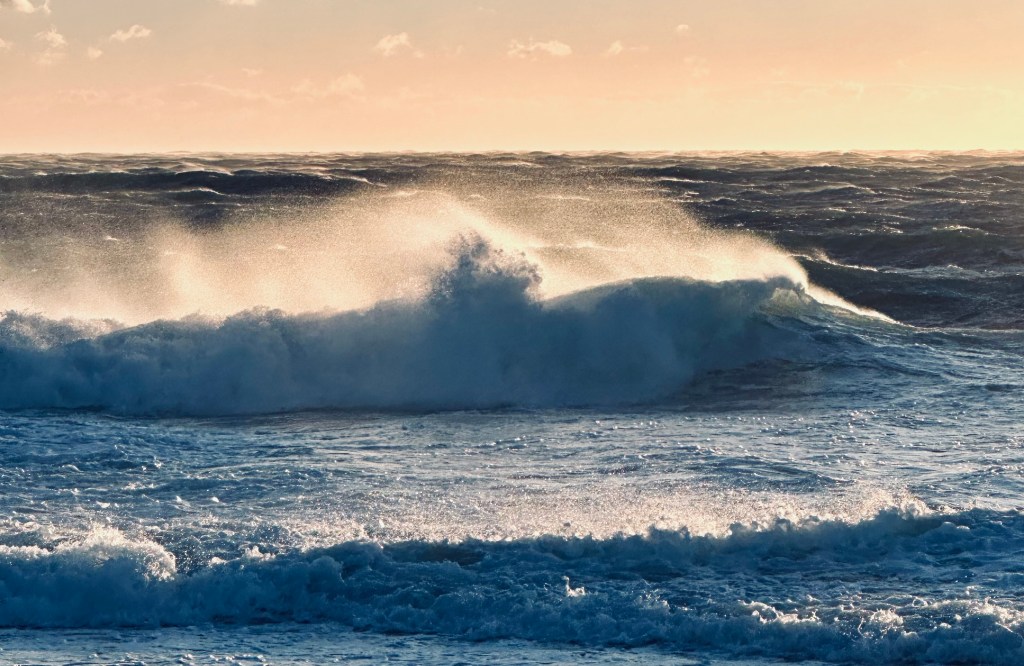
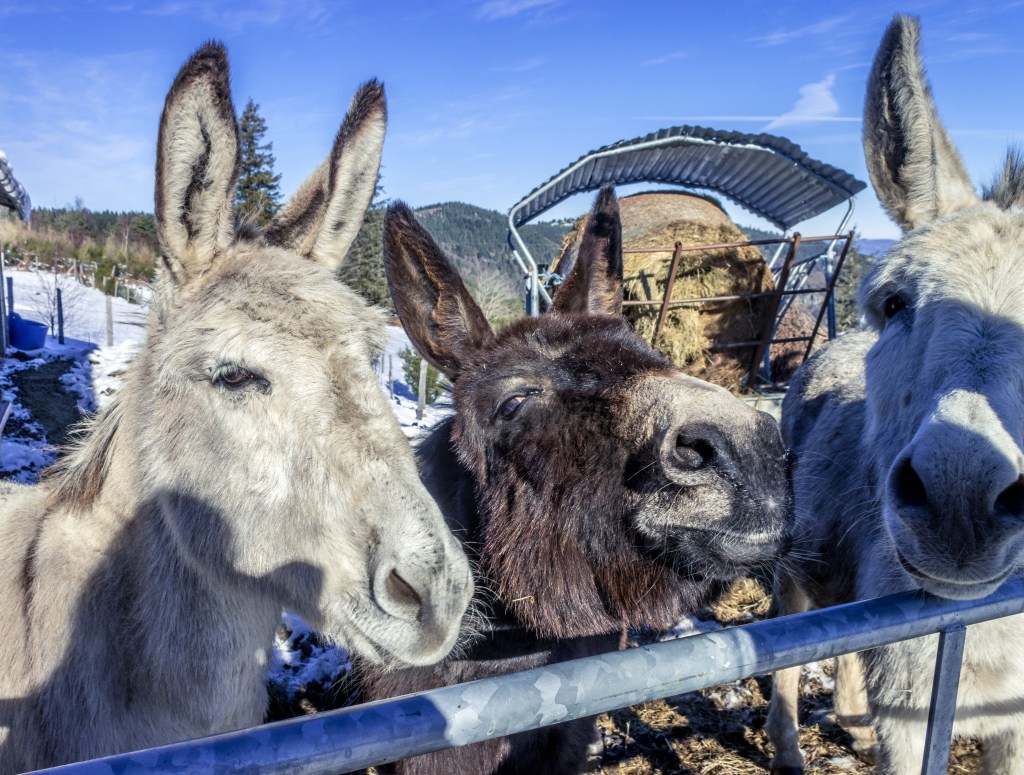
The Mistral has raged for the past few days, a freezing wind from the north that knows no mercy. This wind doesn’t whisper; it roars. You don’t bargain with it; you endure it. Waves surge, but no matter how hard they try, they never reach the shore. This self-proclaimed Master of Winds pushes them right back into the Mediterranean, as if mocking their puny efforts. In our village, the fishermen say it sends jellyfish hurtling back toward North Africa. Further inland, locals swear that the Mistral can blow the ears off a donkey and silence even the most expansive politicians.
The Mistral reshapes the landscape, bending and sometimes breaking trees, scattering anything not tied down, and whipping the light and shadows into dizzying, shifting patterns. Its intensity can be exhausting, both mentally and physically, stirring up restlessness, wearing down patience, and often making you question your own sanity. Van Gogh, chasing the light of Provence, called it “the idiot wind,” lamenting how it toppled his easel, scattered his paints, and challenged him at every turn.
Many legends surround this infamous wind. One story goes something like this. The word “le vent” means the wind in English, and is masculine, thus the use of he, his, and him.
Long ago, the Mistral burst out from the marshlands of Vivarais, ripping through a massive rock arch with a fury that seemed to tear the very air apart. The Master of Winds roared down the Rhône Valley toward the Mediterranean Sea, a wild surge that destroyed everything in his path. Towns along his route were battered and drained. Roof tiles flew from homes as if torn away by invisible claws, trees fell and sprawled across roads, while laundry and tax refunds disappeared into the wind, never to be seen again. The people, their patience worn thin by years of his relentless rule, had finally reached their breaking point.
Determined to reclaim a measure of peace, a band of brave young men and women built a massive door from the strongest timber, reinforced with iron beams, and marched to the arch where the mighty wind dwelled. While the Mistral slept, they seized their chance, hauling the barrier into place and hammering it shut with determination.
When the Mistral awoke, he was furious. “You insignificant human creatures, what have you done? When I get out of here, I will blow away everything! I will curse your towns, your crops, and your animals!”
“That is exactly why you are trapped,” one man replied, shaking slightly while checking the beams one last time before leaving.
For a period, the towns and fields below experienced calm for the first time in years. But summer revealed a harsh truth. The marshes became stagnant, mold spread, insects multiplied unchecked, people started falling ill and couldn’t file their taxes, and the heat became unbearable. They realized that wind was, in fact, vital—shaping the land, clearing the air, and maintaining the rhythm of life.
The mayors of the towns along the Mistral’s path held important meetings to find a solution. After extensive discussion, a few rounds of Pastis, more talks, and some well-worded memos, they finally agreed on a plan. They needed to release the wind. But not the wind who believed that he controlled the world. The mayors drew lots to decide which town would take on the task. An impoverished village near the sealed-up arch drew the short straw, and a delegation was sent to open the door. The Mistral, already aware of their plan, was eagerly waiting.
“We want to let you out,” said the nephew of the assistant to the executive assistant of the mayor, “but you must give us your word not to cause all the havoc you did before.”
In a calm, controlled voice, the mouthpiece of the Mistral replied, “I have learned my lesson, good sir. If you let me out, I promise to behave. I will not uproot your trees, nor tear down your fences, nor blow your roofs off. I am truly sorry for any problems I caused, as I did not know my own strength. You have my word of honor as Master of the Winds that I will behave from now on. I will even improve your daily lives.”
The men were relieved and began removing the nails. When they had removed about half, the Mistral himself broke through with a mighty gust. He zoomed past the startled men, blowing their hats off, then circled back in a roaring rage. One brave soul shouted, “But you gave us your word! Are you a wind whose word means nothing?”
The forces behind the Mistral froze in their path and tried to feel ashamed. What to do? They gently swirled around the trees, blew the dead leaves off the roofs, softly brushed the dew from the fields, and once again promised to control the Mistral’s infamous temper. The men of the village were pleased and headed home to share the good news.
As the Mistral moved south along the valley, he realized he had only promised the nearby towns to be calm. Ah ha! He had tricked the villagers! In glee, he funneled his strength and blew even harder, relishing the freedom to demonstrate his power. Fields bowed in waves, olive trees shivered, doves went into hiding, and the light itself flashed across the hills and sea in maddening patterns. He roared through the fishing villages, boats rocked and strained at their moorings as seagulls screeched and fought to hold their course.
But the people stood steady, and after a while, the Mistral lost strength and returned to his arch in the valley. The olive trees relaxed, the boats left the harbor to catch fish, and the waves finally reached the shore. The village streets grew calm and quiet again. The air, once thick with dust, anger, and the wind’s uncontrollable energy, became clear and pure. Sunlight spilled across the land, sharper than before, revealing every curve of the land, every nuance of the sea, and each shimmering detail of Provence.
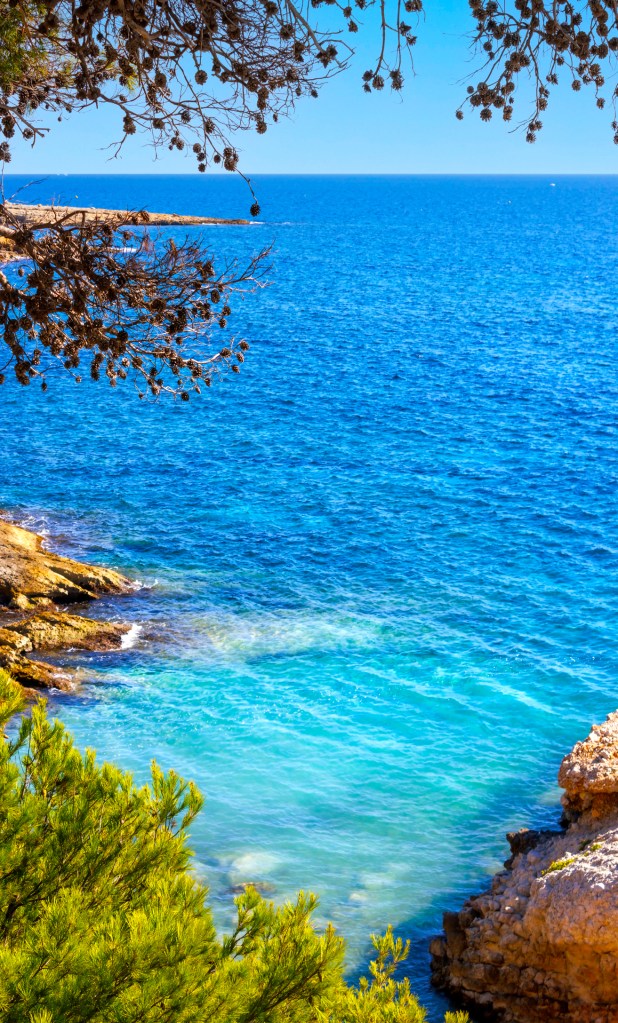
Thankfully, this morning, the Mistral finally stopped blowing. Spring is coming. Slightly surprised to find myself still standing and mostly sane, I stepped outside to see the blue, almost violet skies of Provence. The sea was crystal clear, and I even spotted a tiny red starfish emerging from its hiding spot. Then came the incredible light of Provence, a luminous, living light that inspires, reveals beauty, and restores hope.
It is admirable how the villagers here accept this paradox. They are stoic and seem to understand that the same force capable of causing destruction also leaves the region transformed, renewed, and more vividly alive than before. When the Mistral stops, as it always will, they gather again to play pétanque, Pastis in hand, and the conversation rarely lingers on the wind’s destruction. They say that would give the Mistral too much attention. The real passion is reserved for the unfortunate state of politics in France.
The mayoral elections will be decided this Sunday, which has stirred the village into a mild frenzy. Will the Divers Droit be squeezed out by the Rassemblement National? No one seems entirely sure, although everyone knows the current mayor is a communist, so opinions are plentiful and solutions somewhat scarce. This afternoon, I will wander down to the harbor with Sammy, watch a match of pétanque, and listen as the debate rolls on under those impossibly clear Provençal skies. No doubt I will hear the phrase “Trust the Mistral or a politician at your own peril.”
PS – The current mayor of Martigues, Gaby Charroux, does indeed represent the French communist party, one of the dizzying number of political parties in France.
Discover more from Amy L. Griffin
Subscribe to get the latest posts sent to your email.
 Amy L. Griffin