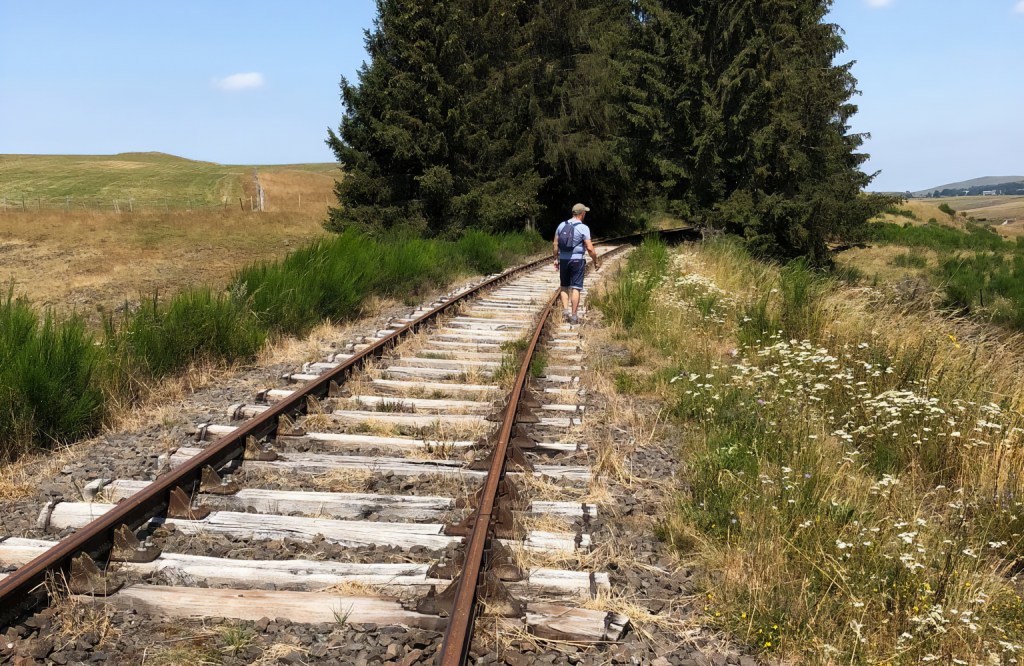
We have been told and perhaps have come to believe that God will never give us more than we can carry. This reassures us and suggests there is a limit to how far we can be pushed, as though every burden has already been measured, stamped, and approved before it reaches us.
In difficult times, or when everything piles up and feels overwhelming, we turn to God. We pray privately, seeking His guidance and strength. He understands our struggles and sees into our hearts. When our prayers are answered, we thank Him and strive to improve ourselves. If they go unanswered, we try to accept it as part of His plan, yet we still feel a need to do something about the situation. Then we remember being told to take up our cross and follow Jesus Christ.
So, we pack everything we are dealing with into an oversized blue backpack, and set out on the road, convincing ourselves this is what faith looks like.
The backpack weighs around twenty pounds, a bit heavy but manageable. We walk along a dry, dusty road with the morning stretching ahead of us. As the temperature rises, we notice a bench by the roadside. We place the backpack on the ground and take a long drink from our water bottle.
After a while, a man on his electric bike stops and asks where we are headed. He notices our backpack looks heavy and offers to put it on his bike. His bike is a two-seater, so we could ride with him until the next town, where he has to stop and deliver eggs to the market.
We feel suspicious because a stranger offers help. What’s his hidden agenda? If we accept, he might load our baggage and quickly pedal off, laughing at our naivety. No, we can’t risk losing our precious cargo of anxiety, grief, sadness, worries, doubts, and hopelessness. That would be disastrous. Besides, we’re not that tired.
So, we stand up from the bench and say,
“Thank you, but it’s okay. God will never give me more than I can carry.”
He offers again, but we politely refuse with a firm smile. To our relief, he shrugs slightly and rides away down the road. We puff out our chest and stand a little taller, knowing that we have passed this first test of faith.
Back on the road, the sun rises higher, the heat intensifies, and sweat begins to run down our back. For some strange reason, the backpack feels a little heavier and there is a pebble in our shoe. When we see a few trees in the distance, we stop and sit on the ground, thankful for a break from the sun.
After a few minutes, a woman from a nearby farm approaches and offers us a bottle of water, saying we look a bit tired and thirsty. She looks slightly familiar, but we can’t quite place her. Maybe she’s the checkout lady at the grocery store? With a warm smile we shake our head and say,
“Thank you, but God will never give me more than I can handle.”
She reassures us that it’s free for weary travelers, and we can even take two bottles since there’s always enough. We glance at the small amount of water left in our bottle and convince ourselves it’s enough. After all, enduring thirst along the way without complaining is what Jesus did, and we are supposed to be like Him. We must endure and place our trust in God.
After shaking the pebble out, we strap on the backpack, which somehow seems heavier. We set on our way feeling grateful that there are still kind people in the cold world willing to help others in need.
After an hour, the road grows rougher, scattered with rocks, and before long, we finish the last of our water. Suddenly, we trip and fall to the ground, the impact knocking the air from us. We lie there for a moment before attempting to move. A steady, outstretched hand appears in front of us. We look up to see our concerned family members, which feels strange because this isn’t their journey. More hands reach toward us, but we roll to our side, wincing at the cut on our knee and wondering if our ankle is sprained, and insist we are okay. Once standing, we brush off the dust and give a bright smile. One of them hands us the backpack, remarking on its weight. We take it from her and say,
“Don’t worry about me! God will never give me more than I can bear.”
Pleased that we are growing in faith and discipline, we continue on our way, limping slightly, and feel a blister developing on our left heel. The backpack must weigh fifty pounds, it’s very hot, and as the road climbs, our muscles protest loudly. We’re out of breath and have to rest every fifteen minutes. Nonetheless, this burning pain is something we take pride in, like when we push ourselves in a sport. The good hurt. No pain, no gain! Our faith in God gives us hope and strength to carry on.
As we near the summit, we see our friends waiting for us. In the back is the group of sweet girls who were never chosen to be the lead in the school play. Then, our stunningly beautiful friend appears. Yes, she made a few mistakes, who hasn’t, but was unfairly burdened with a reputation she didn’t earn. Finally, we see our best friend, and a smile lights up our face. The gentle person who is always present for us, never judging, and following us everywhere. He reaches out, takes both our hands, and folds us into an embrace.
They surround us, reassuring us of their presence and ongoing support, saying we are not alone. Would we like something to eat or drink? Sit down, take a moment. Our best friend notices the bleeding blister and pulls a Band-Aid from his pocket. We smile and say no because Jesus bled on His journey, so we must as well.
We’re glad to see them, but we must remain focused on our journey. After exchanging pleasantries, we say,
“Thanks so much for your concern, but my faith in God is unshakeable. I know He will never give me more than I can endure.”
The final part of the climb is very steep, with intermittent concrete stairs of uneven height, but we keep going, wondering if God will appear soon. The backpack feels like it weighs a thousand pounds. We tell ourselves not to complain and to endure in silence. When we reach the top, we’re too exhausted to take another step and collapse. Wearily, we check our backpacks for any hidden reserves of strength, faith, or courage, but find nothing.
It’s unbearably hot and dusty. We are thirsty and alone. Flies circle our head, but we are too tired to bat them away. Every bone in our body hurts, and our feet are bleeding. We look to the sky and ask in desperation,
“Father, why have you forgotten me? I’m doing what you told me to do. I’m following in your Son’s footsteps. You said you wouldn’t give me more than I can carry, but I honestly can’t handle it anymore. I don’t have enough strength, faith, or belief. I’ve failed, God. I’m so sorry.”
After a long silence, a gentle breeze stirs our hair. In that moment of despair, an ancient voice that carries the secrets of the stars comes to us.
“My Child, I have been with you at every step, even if you did not see My face. I gave you many special people on your journey, yet you refused each one. When you pushed them away, it was Me you were pushing away.”
We hang our head and try desperately to think of something to say in our defense, but to our slight discomfort, the voice continues.
“My Son did not walk His path alone as He carried the cross. Do you think it was mere chance or circumstance that help was provided along the way? When the weight became too much, I brought Simon of Cyrene to help carry His cross. Along the way, I gave Veronica the courage to step forward and wipe off the sweat and dirt, cooling His face. Mary, His mother, your mother, was by Him every step, sharing in His suffering. She is there for you too, if you would only accept her outstretched hand. At the foot of the cross stood Mary Magdalene, the holy women, and John the apostle, whom my Son loved so dearly. They stayed with Jesus until the end became a new beginning.
If I sent the Son of God, the Son of Man, precious help when He needed it most, why would I not help you?”
At this, we feel absolutely mortified and ashamed. How could we have the audacity to believe we are stronger than Jesus?
Not knowing what else to do, we dump the contents of our backpack on the ground. Our troubles, anxieties, grief, and hopelessness have not disappeared; they are taking up even more space. Then we notice piles of rocks and wonder who put those rocks in our backpack when we weren’t looking. Some are inscribed with ‘isolation’ and ‘doubt,’ but the majority and the heaviest are engraved with ‘Ego’ and ‘Pride.’
The voice speaks again, and it slowly dawns on us that God intentionally gives us more than we can handle, and He does so with a purpose. Not to break us, but to bring us to the point where we put down our pride, stop relying only on ourselves, and finally understand that we were never meant to carry everything alone.
I don’t know about you, but I’ve walked this lonely road many times, often turning others away, mistaking pride and ego for strength and purpose.
Let’s take a moment, not to reflect on the many times our help has been refused, but honestly ask ourselves if we have ever rejected help? Or are we currently doing so? Perhaps we are convincing ourselves that that’s what blind faith means: relying on our own strength, and that it is God’s will that we must walk and suffer alone. Is that the reality, or is it our pride and ego talking?
Yes, we must walk our own, sometimes difficult, sometimes joyful journey, and nobody can walk it for us. But we don’t have to do it alone. God is always there for us, and He sends others to help us along the way. And each time we refuse, we are saying, thanks God, but no thanks, I can handle this on my own.
So the next time we meet someone on the road, and they say,
“Hey, you look tired. There’s a little restaurant down the road, it’s nice, someone took me there just last week. Come on, I’ll buy you a coffee, and we can catch up.”
Instead of saying no, bargaining, or making excuses, let’s set aside our pride, smile, and say,
“Thank you, God. I’d love that.”
Discover more from Amy L. Griffin
Subscribe to get the latest posts sent to your email.

