When I signed my first employment contract in France, the human resources director informed me that I would have to work on the Monday after Pentecost. I was surprised, as public holidays are sacred in France, but felt that the extra overtime pay would make it worthwhile.
She then informed me that I would not be paid for that day, but my wages would be donated to a good cause.
When I asked if I could choose the charity, perhaps a dog rescue, she explained that it was not my choice. My wages for the day would go toward government programs assisting the elderly and people with disabilities, and they would not be tax-deductible either.
Honestly, I wasn’t thrilled, but in France, it’s the law. And it is an undeniably good cause. It just wasn’t my choice and I had absolutely no say in the matter.
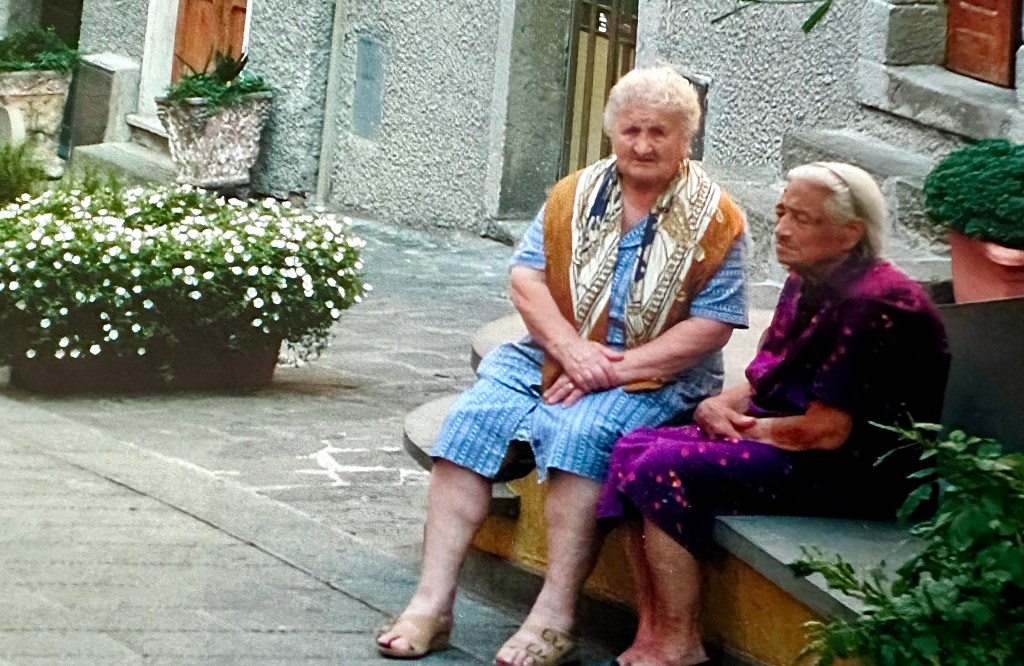
In the summer of 2003, Europe experienced an intense heatwave that caused approximately 15,000 deaths among the elderly and disabled in France. Many were found days later in their apartments and homes, often isolated, as much of the country was away on summer vacation. People were discovered only when neighbors observed shutters left closed for days or noticed the mail piling up.
It was a human disaster that unfolded quietly, without the dramatic live coverage that usually accompanies catastrophe. The true scale of the tragedy became clear only in the weeks that followed. What shocked many people was not only the number of deaths, but where they occurred: inside ordinary apartments, in major cities, while everyday life outside continued largely unaware.
How could so many people go unnoticed for so long?
It was not because France lacked hospitals or doctors. The problem was that there was no organized system to regularly check on vulnerable people living alone. In response, France created the National Day of Solidarity in 2004, observed on the Monday following Pentecost.
Under this system, employees in both the public and private sectors are required to contribute seven hours of unpaid work each year. Employers also contribute through a payroll-based levy. Together, these contributions generate more than 3.5 billion euros annually to support long-term care for the elderly and people with disabilities.
Over time, the system has evolved. The hours no longer need to be worked on a single day and can instead be spread across the year. The SNCF, France’s national railway company, famously negotiated to preserve Pentecost Monday as a paid holiday by having employees work an additional 1 minute and 52 seconds each day throughout the year.
The principle, however, remains unchanged: a small contribution from everyone becomes a national system of care. It also raises awareness that aging, illness, and disability are not distant problems belonging only to others. And, it has proven effective over the years.
Naturally, the policy remains debated because in France, absolutely everything is debated. Critics question whether unpaid labor should exist at all, even for a worthy cause. Others see it as a civic duty, an acknowledgment that vulnerability eventually touches every society and potentially every individual.
Let’s take this concept and apply it to the United States.
According to labor statistics, there are roughly 163 million active workers in the country. If each contributed the equivalent of seven unpaid hours annually at an average wage of around $30 per hour, the system could theoretically generate more than 34 billion dollars per year. Add an employer contribution similar to the French model, roughly 0.3 percent of payroll, and the total could rise to more than 60 billion dollars annually directed toward elder care and disability support.
Would Americans accept such a system? What about other countries?
Would you personally sacrifice a day’s pay, wherever you are, even if it could be condensed into less than an hour each month or just a few minutes per day, for a cause that is important but not freely chosen?
France has already answered that question. Participation is mandatory because the state considers solidarity a civic responsibility rather than a matter of personal preference.
So what is the connection to Pentecost, besides the specific day? Pentecost is often considered the birth of the Church, when the apostles received the gifts of the Holy Spirit and were sent out to spread Christ’s teachings. The Gospels repeatedly emphasize care for the poor, the sick, and the marginalized and Jesus advocated for a transformation of the human heart through giving. In Scripture, Paul describes the very act of giving as a blessing that benefits both the giver and the receiver, encouraging voluntary and cheerful giving.
Let’s take a look at the practice of tithing to the Catholic Church. Tithing was a rule for the Israelites who worshipped under the Old Testament law. Jesus never commanded it for the church, and neither did the apostles. The word tithe comes from an Old English word meaning a “tenth part” or giving 10% of your salary. While there is no mention of tithing in the New Testament, the Catechism of the Catholic Church expresses: “You shall help to provide for the needs of the Church,” meaning that the faithful are obliged to assist with the material needs of the Church, each according to his or her own ability. Yet when the offering basket passes through the pews, some people might feel a subtle pressure to contribute, whether from faith, habit, guilt, or simply the awareness of being observed by others.
Outside religion, modern society offers endless opportunities to give. The United States alone has nearly two million registered nonprofits. There are crowdfunding campaigns for struggling families and medical emergencies, funding programs for disaster relief, animal rescues, hospitals, veterans, churches, schools, and countless other excellent and worthy causes.
But when giving becomes expected or even mandatory, rather than freely chosen, does it still feel joyful, heartfelt, and meaningful? Does it transform the human heart in the way Jesus intended?
Or does the outcome matter more than the intention?
In the end, the recipients of France’s Day of Solidarity will never know whether people contributed those seven hours willingly or with some reluctance to that specific cause. The money still supports people who genuinely need help. Yet, part of me would still prefer the freedom to choose where my wages go. Perhaps to Guide Dogs for the Blind, which still assists people with disabilities.
What about you?
Discover more from Amy L. Griffin
Subscribe to get the latest posts sent to your email.


Amy, these thoughts have compelled me to contemplate how I feel about giving in this world and my own giving. I prefer to give my time so that I know where it is given and how it is used by the recipient(s). Giving should always be voluntary, not forced. But, much good is done involuntarily as through taxes or other means. One who gives from compassion or other feelings receives the reward of knowing that he/she is contributing to the world. Those who are forced to give may not ever feel the satisfaction of knowing that someone is relieved of a heavy burden due to what they receive.
I am happy that there are many, many people who are trying to make this world a more peaceful, comfortable planet.