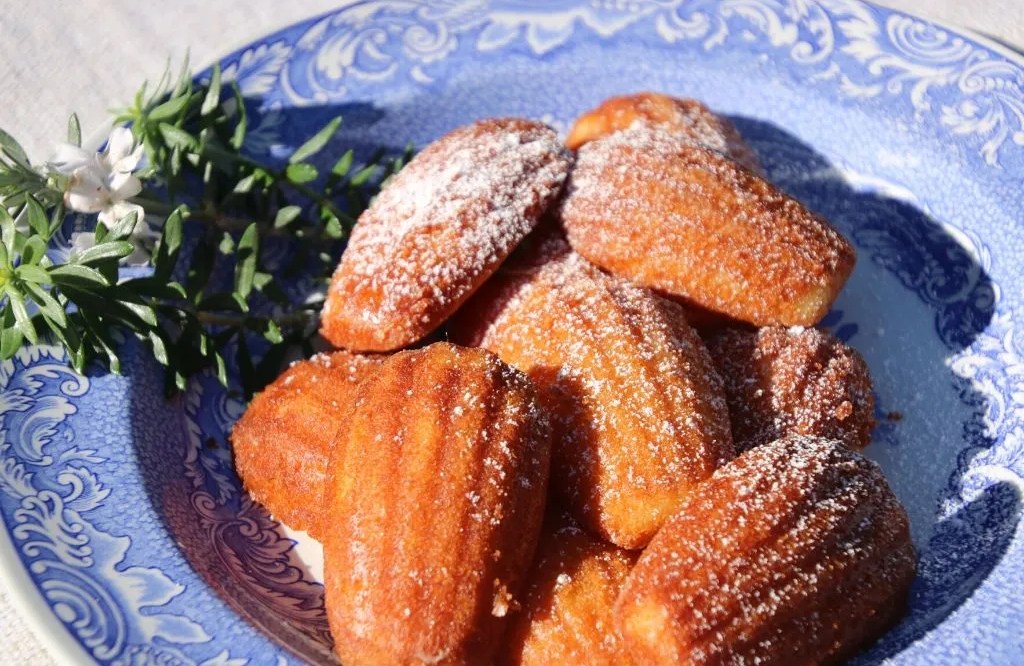
In his book In Search of Lost Time, French writer Marcel Proust describes a moment when he returns home exhausted on a winter evening and absentmindedly dips a madeleine into a cup of tea. When he tastes the madeleine, suddenly time unravels and he is no longer simply seated at the table in the present. He is back in the village of Combray as a child, on Sunday mornings in his aunt Léonie’s home, the warmth of lime flower tea, the old gray house, the garden, the village church, an entire vanished world rising intact from “the warm liquid and the crumbs with it.”
In French, the phrase “Madeleine de Proust” has come to mean those moments when something ordinary unexpectedly awakens the past through sensation rather than rational thought. It can be anything familiar that suddenly carries more than itself, a moment that brings us back to our childhood, or even just a few years ago.
We all know how this feels. A whiff of baking cookies, a fragment of music, the scent of the forest floor after rain, the crackle of fireworks, the taste of a ripe peach, the sight of a packed suitcase open on a bed before travel, or salty air drifting through the open window. Suddenly, time folds upon itself, and the distance between past and present collapses for a moment so completely it almost feels unreal.
These moments don’t feel like typical memories. Time seems to loosen, and for a brief moment, we aren’t just observers outside the memory; we’re back inside it.
Is there a downside, a bad taste to these little madeleines? Well, we do not get to choose when or where it happens, which can be disconcerting. Nor do we stand at some inner gate deciding what may re-enter and what should remain behind. There is no careful sorting of experience into what feels safe enough to revisit and what is better left undisturbed. What rises comes uninvited, drawn from layers within us that do not answer to our preferences or readiness.
Sometimes it arrives as joy, sudden and almost disorienting in its clarity, so immediate it feels like being touched by light. Sometimes it returns as a subtle tenderness, something we thought had softened into distance, now reappearing with surprising closeness. And at times it is a piercing sorrow, just as intact as it once was, returning with a vividness that makes the years between disappear.
Memory is not something we step in and out of at will. It is something we live within, and the past does not stay politely at a distance. It persists within perception itself, braided into sensation, embedded in instinct, so that ordinary moments can suddenly fracture open and admit a brief instant of time without warning. We may experience a moment of deep sadness and have to excuse ourselves so that nobody sees the tears welling up in our eyes.
We are repeatedly told that healing requires release, that maturity is measured by how completely we loosen our hold on what came before, and that forward motion depends on leaving the past properly behind so that life can proceed unencumbered. Only then will we grow. But that isn’t true. We do not progress by subtraction or by erasing what came before. Everything we have been and are now stays folded into perception and sensation.
In our Madeleine de Proust moments, when a memory rises uninvited, we are not being pulled backward. We are formed in the textures, patterns, and motions of lived time, which do not dissolve simply because we move forward. Nothing is wrong with us when the past touches the present without permission. It is not a sign that we have failed because we are stuck or unable to leave the past behind. This is not a flaw in how we heal but part of how we remain whole in our beauty, our brokenness, and everything in between.
These rare and special moments when time converges serve as confirmations of depth, proving that we have truly lived rather than just existed. And that is beautiful.

Discover more from Amy L. Griffin
Subscribe to get the latest posts sent to your email.

