One of the most common pieces of advice we hear is that you cannot truly love another until you learn to love yourself. Despite seeing that saying embroidered on couch pillows and scattered throughout self-help literature, I have never been entirely convinced. Not because it sounds unreasonable. In fact, it sounds so reasonable that questioning it feels vaguely irresponsible, like questioning whether vegetables are good for you or whether it is wise to back up your computer. But maybe we have the order backward. Maybe we learn to love ourselves by seeing how others love us.
There have been many seasons in my life when I was not especially fond of myself. Long periods when I focused more on my shortcomings than my strengths, when self-criticism came far more naturally than self-acceptance. Periods when I truly didn’t like myself and believed nobody else could either. Yet those same seasons were filled with moments when I loved others deeply. I cared for friends, loved and worried about family members, celebrated their joys, sat with them in their grief, and did my best to be present for them. I saw so much good in them, so many lovable and amazing traits. Whatever opinion I had of myself at the time never kept me from loving them.
We are often told that self-reflection leads to a healthy self-view. If we spend enough time analyzing and evaluating ourselves, wandering through the rocky interior landscape of our minds and souls, we will eventually arrive at an enlightened appreciation of who we are. Most of us already spend a great deal of time thinking about ourselves, and the results are mixed at best.
We are on a first-name basis with our faults and shortcomings. In this book we call life, we focus on the chapters we wish we had written differently, the pages we would rather tear out, and the moments that make us cringe. Somehow, we become convinced that these define us.
What surprises us is that the people who love us seem to be reading a different story. This is not because they are unaware of our flaws. In many cases, they know them quite well. They know that we can be impatient, stubborn, insecure, judgmental, prideful, defensive, and occasionally exhausting. Some of them have experienced these qualities firsthand and could provide examples if necessary.
Despite this, they see qualities that feel ordinary and unremarkable to us simply because we have lived with them for so long. While we dwell on our faults, they remember our kindness and the countless small ways we have cared for others without thinking much about it. While we confirm our insecurities, they see the courage it took to keep showing up, speaking up, trying again, and moving forward despite our doubts and past failures. While we focus on our selfish moments, they remember our generosity, the times we gave our time, attention, energy, and love without expecting anything in return. They see the flaws, but they also see the larger pattern of a life, and somehow, despite all our efforts to the contrary, they refuse to let our worst qualities become the defining theme. We tend to see the worst and are too close to our own story to trust it completely. The people who love us can step back and see something greater.
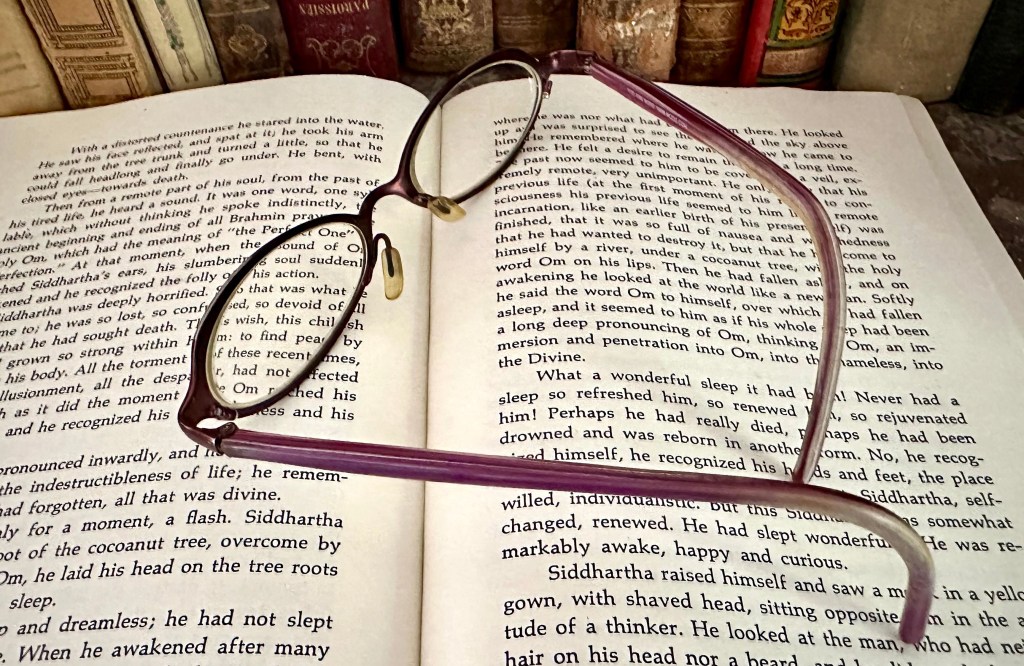
In a sense, they allow us to borrow their eyes, kinder eyes. For a moment, we see ourselves through the eyes of someone who loves us, someone not fixated on our shortcomings. They help us remember the good things and remind us that our story is larger than the moment we happen to be stuck in.
But there is still a limit to what even loving eyes can hold. They can notice more about us than we can, and they refuse to reduce us to our worst moments, but they are still human.
There is another kind of sight altogether. One that is not shaped by limited memory, nor does it grow dim with familiarity or fatigue, or shift with distance. It does not piece us together from fragments or rely on the most recent version of who we have been. It is what He beholds in us. God has read every page, including the ones we would rather leave unpublished, yet He never closes the book in disappointment or wishes it had been made into a Disney film. He continues through the whole story, past and in progress, and insists, despite our arguments, that we are worth loving unconditionally, even when our own view of ourselves will not allow it.
God’s borrowed eyes are such an incredible gift. It’s not like checking out a book on spirituality or faith from the local library. There is no return date or overdue notice. We don’t get just a few precious days of seeing ourselves through His love before being forced to hand the perspective back. He encourages us to keep it. To try to see ourselves as He sees us and not convince ourselves otherwise.
I don’t think we learn self-love by staring harder at our reflection or by reading an endless array of helpful articles. We can learn to love ourselves a little more by borrowing kinder, more loving eyes and letting someone else interpret the story. Will that make us love others more deeply? That is up to each of us to decide, but self-love is not necessarily where love begins. Maybe, just maybe, it begins with allowing ourselves to be seen through the eyes of those who love us, especially the One who created us and loves us without measure.
Discover more from Amy L. Griffin
Subscribe to get the latest posts sent to your email.


Beautifully written and so very true I believe.