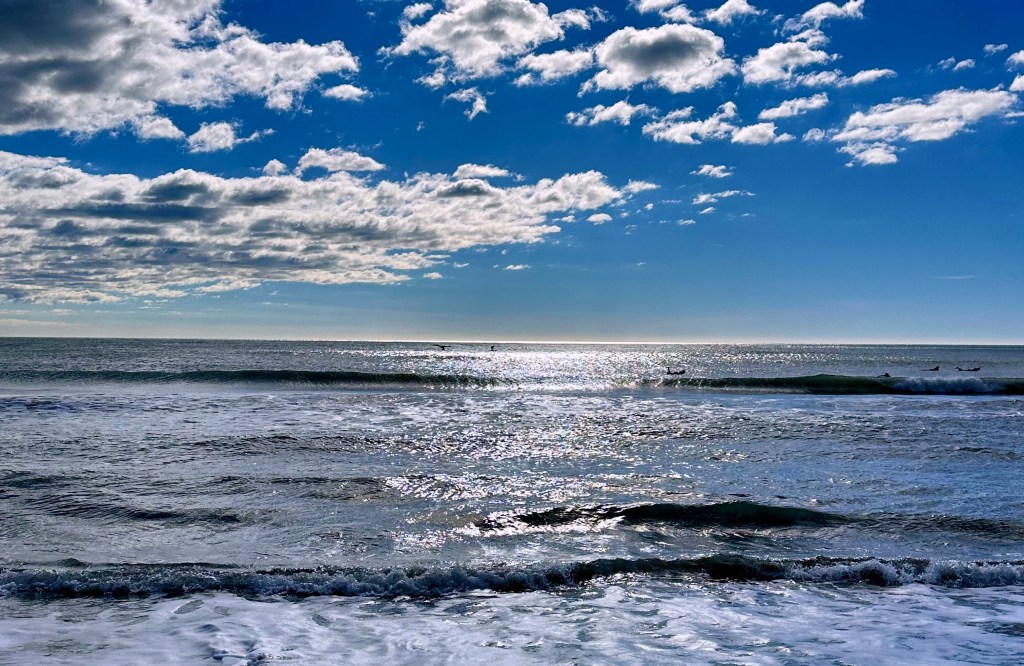
What if you could follow in the footsteps of Mary Magdalene, from the moment she first set foot on the shores of Southern France to the mountain cave where she is said to have spent her final years? I am lucky to live in this region, under the impossibly blue skies of Provence, a vibrant landscape of sea, small villages, gleaming cities, olive trees, lavender, and mountains. Over the years, I have walked the places where her story has been carried for centuries. In this series of three reflections, I invite you to join me as we follow ancient traditions, discover the legends that have shaped these places, and pause along the way to wonder what Mary Magdalene might have seen, feared, hoped, and believed as she made her way through an unfamiliar land.
Our journey begins in the Camargue, a mysterious, ever-changing region in southern France where earth, water, and sky seem to merge into a vast timelessness. At its heart, where the Rhône River meets the Mediterranean Sea, lies the village of Les Saintes-Maries-de-la-Mer.
The Camargue is unlike anywhere else in Provence or in the world, for that matter. Its swampy lowlands unfold almost like a dreamscape, shaped by water and wind, salt and sunlight. The gardians, the cowboys of the Camargue, still ride through the marshes among herds of white horses and black bulls. Pink flamingos stalk through shallow lagoons trying to look important, while herons stand motionless among the reeds like marble sentinels.
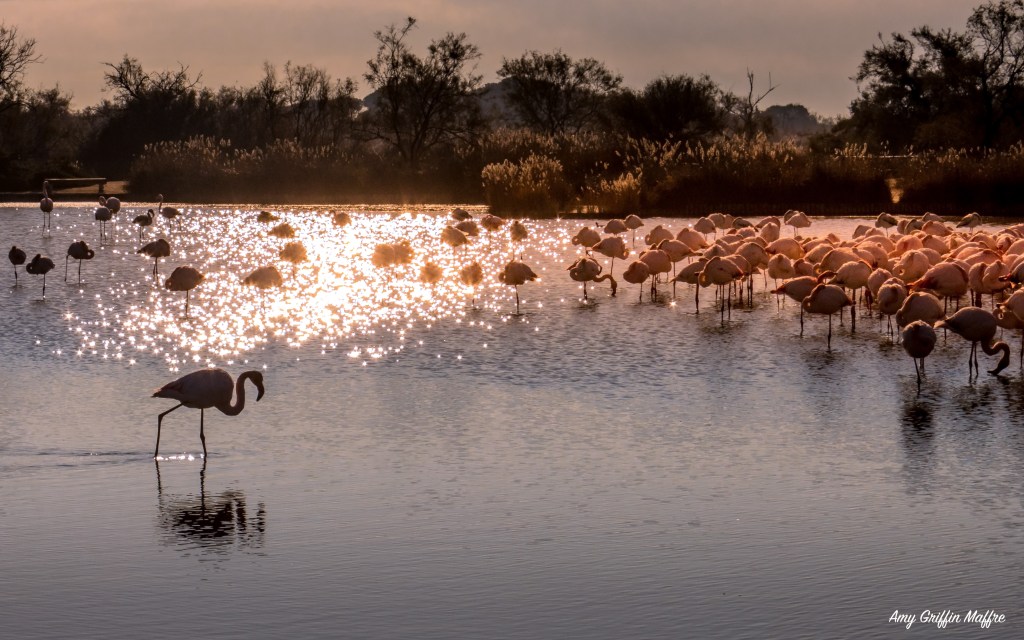
Beyond the wetlands, glittering salt flats stretch toward the horizon like enormous mirrors reflecting the sky. Here, the boundary between land and sea seems to disappear. There is a particular luminosity to Les Saintes-Maries-de-la-Mer, a light that shifts with the seasons.
The medieval church that dominates the village was constructed between the ninth and twelfth centuries, serving as both a place of worship and a fortress. Villagers sought refuge inside during pirate attacks, and the church contains a well of fresh water. In my university days, I was studying abroad in France and we visited this town. Just outside the church, a grizzled old, gypsy woman agressively grabbed my arm to read my palm. When I politely tried to take my hand back, she cursed me in a very threatening manner and a strange guttural language. I will never know if her curse took effect, but I am suspicious about my sudden allergies to red peppers following that day.
According to an ancient Provençal tradition, after the Resurrection of Christ, a group of His followers was forced to flee the Holy Land to escape persecution. Among them were Mary Magdalene, Lazarus, Mary Salome, the mother of the apostles John and James; Mary of Clopas, the mother of the apostle James the Less; and others.
They set out in a small boat or raft and sailed across the Mediterranean until they reached the shores of what is now Les Saintes-Maries-de-la-Mer. The village takes its name from the women who came ashore here: the Saintes Maries, translated as the Holy Marys of the Sea. The lonely, windswept beaches must have been a relief after the noise, heat, dust and sheer humanity of Jerusalem.
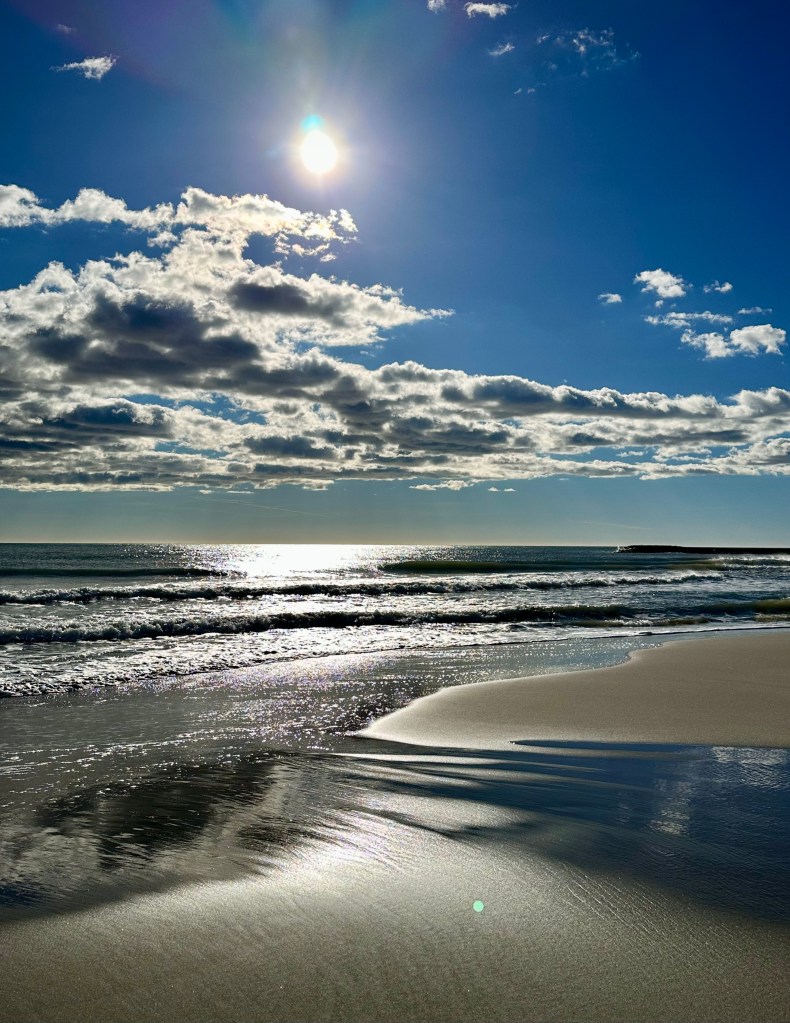
Sitting on the beaches of Les Saintes-Maries-de-la-Mer and looking out at the glittering water, I sometimes wonder what Mary Magdalene might have been feeling and thinking. She must have been afraid and probably wondered what on earth God could possibly ask of her next. She had stood beneath the cross when the world seemed to end, and she had been the one to hear her name spoken by Christ in the garden where death itself had been overturned. Now she was standing on an unknown shore far from the life she once knew.
How would she tell the story of Jesus Christ to these people? She didn’t know the language and as a woman, would they even listen to her?
She was surrounded by people whose customs, clothing, and way of life were completely unfamiliar. She had left behind everything she knew, and now even the simplest things, asking for food, finding shelter, speaking to a stranger, would have been difficult. Perhaps she wondered where she would sleep and whether anyone would welcome her. She could not have known what lay ahead or how long she would remain in this strange land.
Did she ever feel abandoned? Perhaps she stood by the edge of the sea, gazing over the horizon as though Jesus might appear there, walking toward her once again.
Did she miss Him? How could she not?
Mary Salome and Mary of Clopas remained in the region, living among the local people and sharing Jesus’s teaching. In the fifteenth century, relics believed to be both women, were discovered in the church. Mary Magdalene did not remain in Les Saintes-Maries-de-la-Mer, but continued eastward with Lazarus.
Mary Magdalene loved Jesus deeply and trusted in the God who had guided her through the darkest moments. Her faith probably didn’t erase the fear of the unknown, but it may have provided her with enough courage to face it.
What would it mean to have Mary Magdalene’s bravery and incredible faith today? We live in a world that teaches us to plan, prepare, protect, and control. We are expected to know what we are doing, to have a career plan, financial security, the right answers, and a carefully constructed future. We insure our homes, track our health, watch our investments, and carry a phone that can tell us exactly where we are (or where we should be) at every moment. Yet we are still frightened by the things we cannot control, such as relationship changes, family struggles, a health issue, job worries, the loneliness of getting older, or life taking us somewhere we absolutely never intended to go.
Faith doesn’t always look like certainty or heroic courage. It can be the decision not to let fear have the final word. It can be resisting the pressure to have everything figured out, to measure our lives by what the world calls success, or to believe that we are safe only when everything is under our control. Mary had no guarantee that the road ahead would be easy, yet she continued on her journey.
When I sit on the beaches of Les-Saintes-Maries-de-la-Mer, I sometimes ask myself what I would do if God asked me to loosen my grip or even let go of the life I had planned for myself and completely trust Him with what comes next. Would I have the courage to say yes? Would you?
If everything I had built or depended upon were suddenly taken away, would I still believe that God was enough? Would you?
Mary Magdalene did.
Next week, join me to visit Mary’s next destination, 65 km east at Sainte-Croix, where we’ll discover an ancient stone cross, hear about a miracle and a priceless treasure will be revealed.
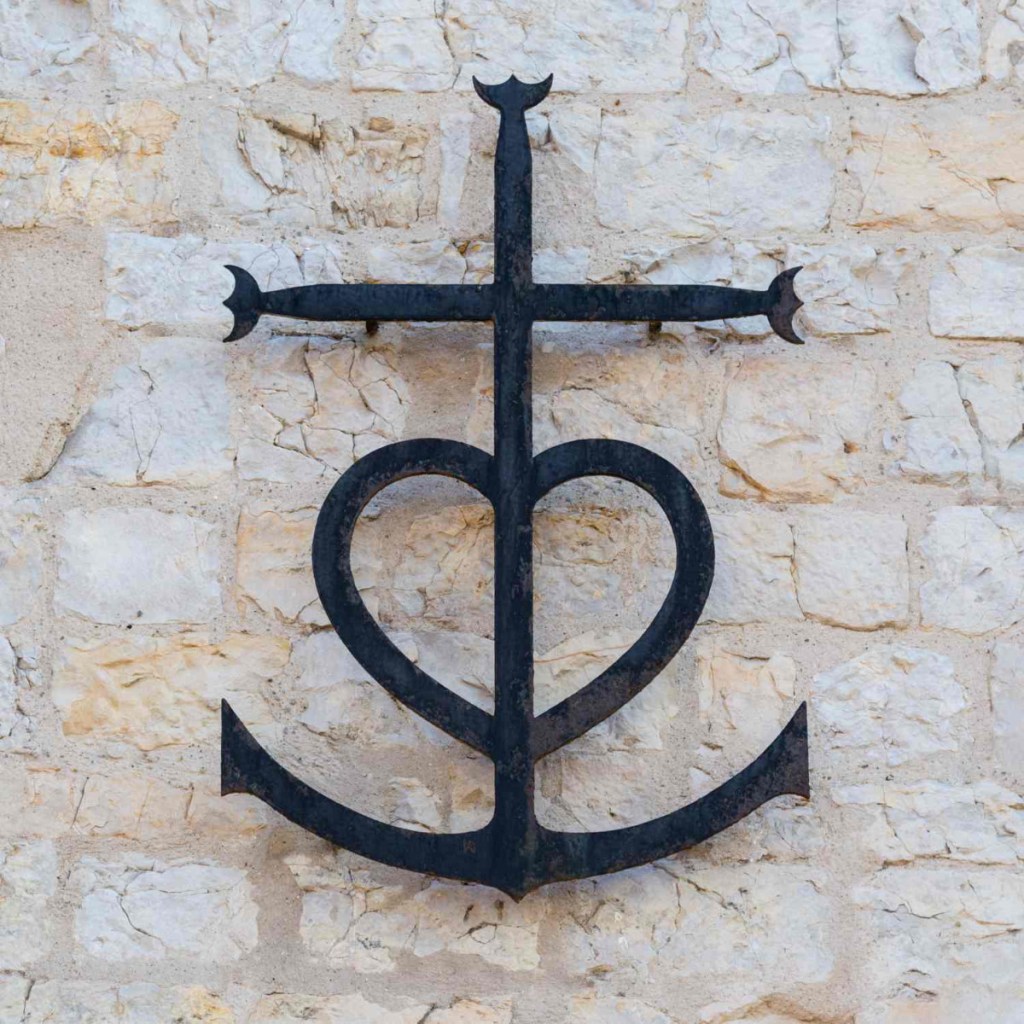
The famous Cross of the Camargue, created in the 1920s, brings together the faith and traditions of this unique region in a single symbol. At its center is the Christian cross, representing faith, while its three trident-shaped ends recall the tools of the gardians, the horsemen of the Camargue, and also evoke the Holy Trinity. Beneath it is a heart, representing love, and an anchor, representing hope, reflecting the deep connection of the Camargue’s people to the sea and its waterways. Together, the three elements form a beautiful expression of faith, hope, and love.
Discover more from Amy L. Griffin
Subscribe to get the latest posts sent to your email.


Thank Amy for this beautiful reflection about Mary Magdalene. I didn’t know anything about her life after Jesus died and went to his Farher.
I’m glad you enjoyed it. She was a very interesting woman. I hope you enjoy the next two reflections on her journey through Provence.