In this second reflection on the footsteps of Mary Magdalene, we follow her and Lazarus as they left the long, sandy beaches of Les Saintes-Maries-de-la-Mer and headed east, toward the sunrise. The landscape they entered is what we now call the Côte Bleue, or the Blue Coast. The farther east they traveled, the more rugged it became. Rocky limestone beaches appeared between the rocks, and the garrigue grew low and wild with thyme, rosemary, and sage, releasing their pungent fragrances in the wind.
Eventually, the path reaches the little village of Carro, where I currently live. Village life is shaped around the fish market, where the catch of the day includes oysters, Mediterranean fish of all kinds, and spiny sea urchins. Old fishermen share stories over glasses of milky yellow Pastis and discuss the state of politics in France. Mary would probably have smiled as she listened to a grizzled old fisherman recount the famous story for the hundredth time, of the day the village caught 7,000 tuna. She was used to hanging around with fishermen.
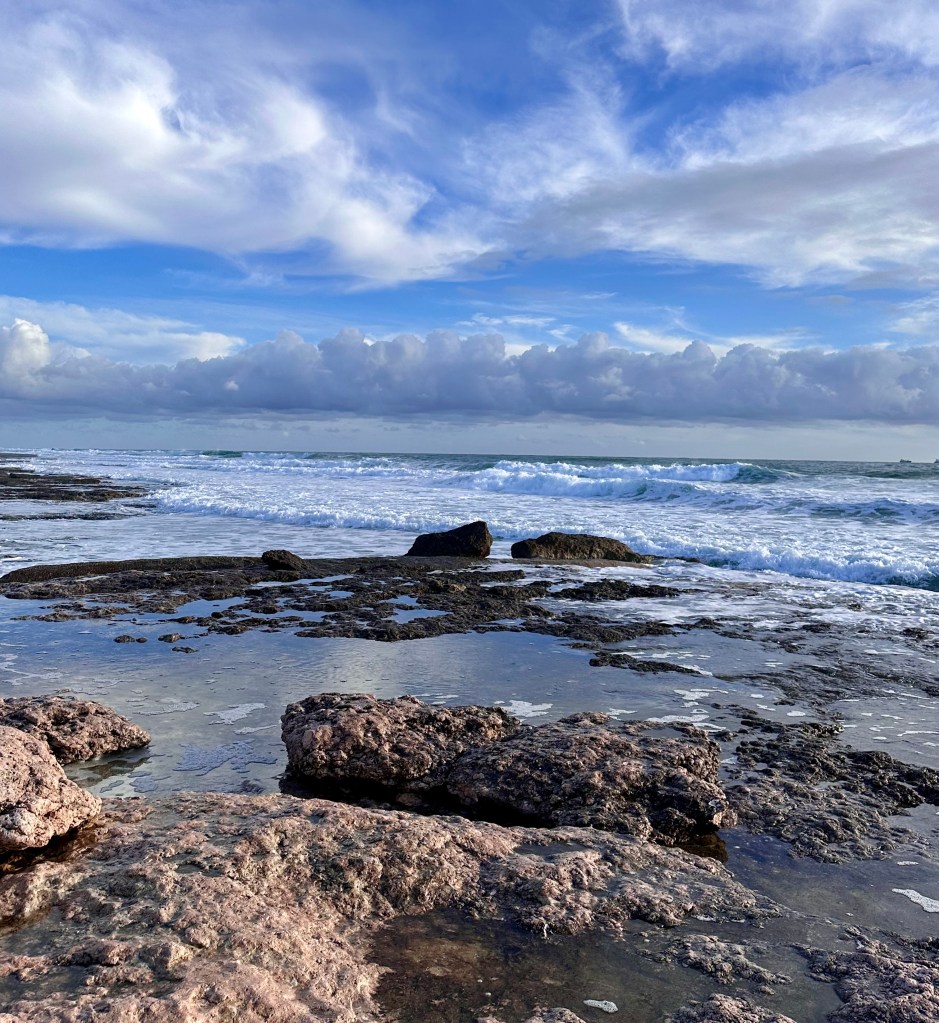
Perhaps she sat for a while on the pink-hued limestone beach, a favorite spot where I sit with my dog Sammy to watch the waves. Maybe she wondered where she should go next and what God wanted her to do now. Or maybe she just thought about Jesus. About their conversations on the road and meals beside the water. About His teachings, how His eyes lit up when He smiled, and His infinite love.
Leaving Carro, Mary and Lazarus would have headed to La Couronne, a village whose name means “The Crown.” From there, the coastline transforms into a series of headlands, beaches, and narrow paths that ascend away from the Mediterranean before descending back toward it. The cold Mistral wind is formidable, sweeping across the bluffs and pushing the waves back into the sea. Eventually, the path would lead them to Sainte-Croix.
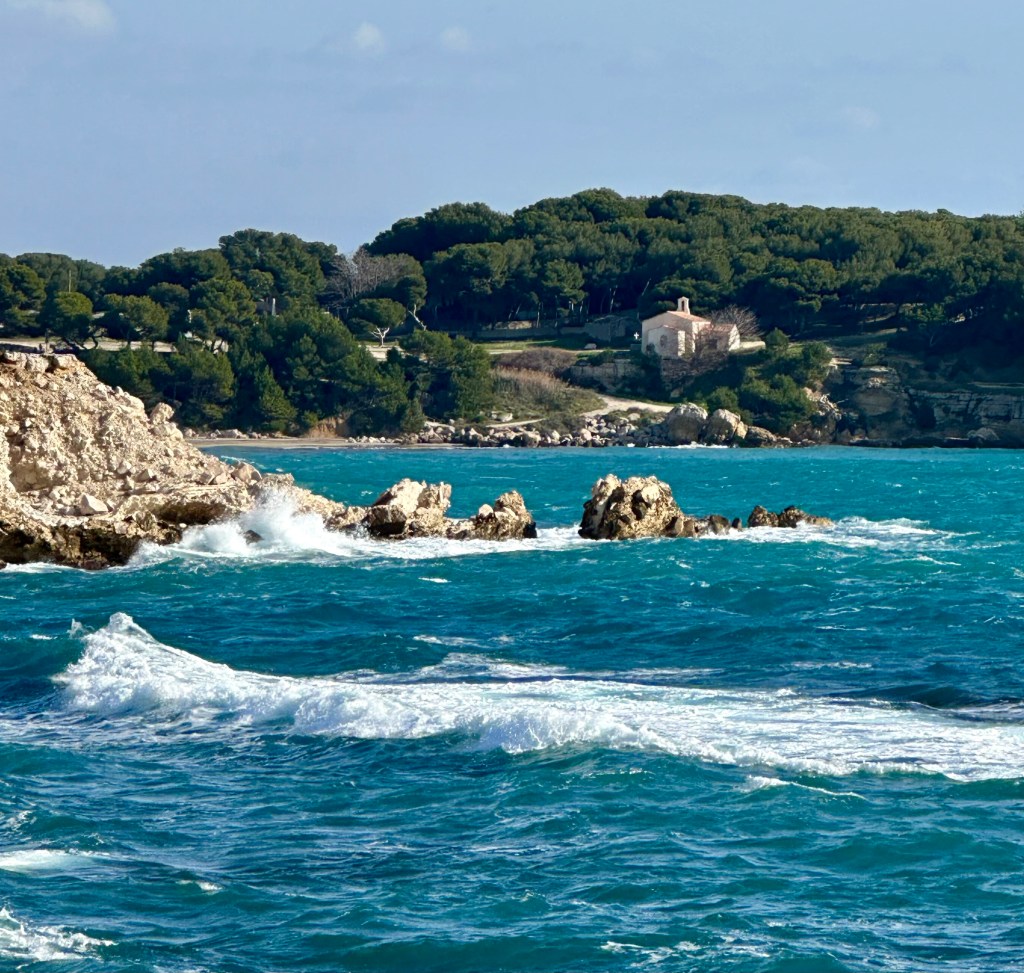
The breathtaking beauty of Sainte-Croix is striking enough to halt anyone in their tracks. The cove is protected by rocky headlands, with the Mediterranean changing color with the light. A solitary white chapel overlooks the sea.
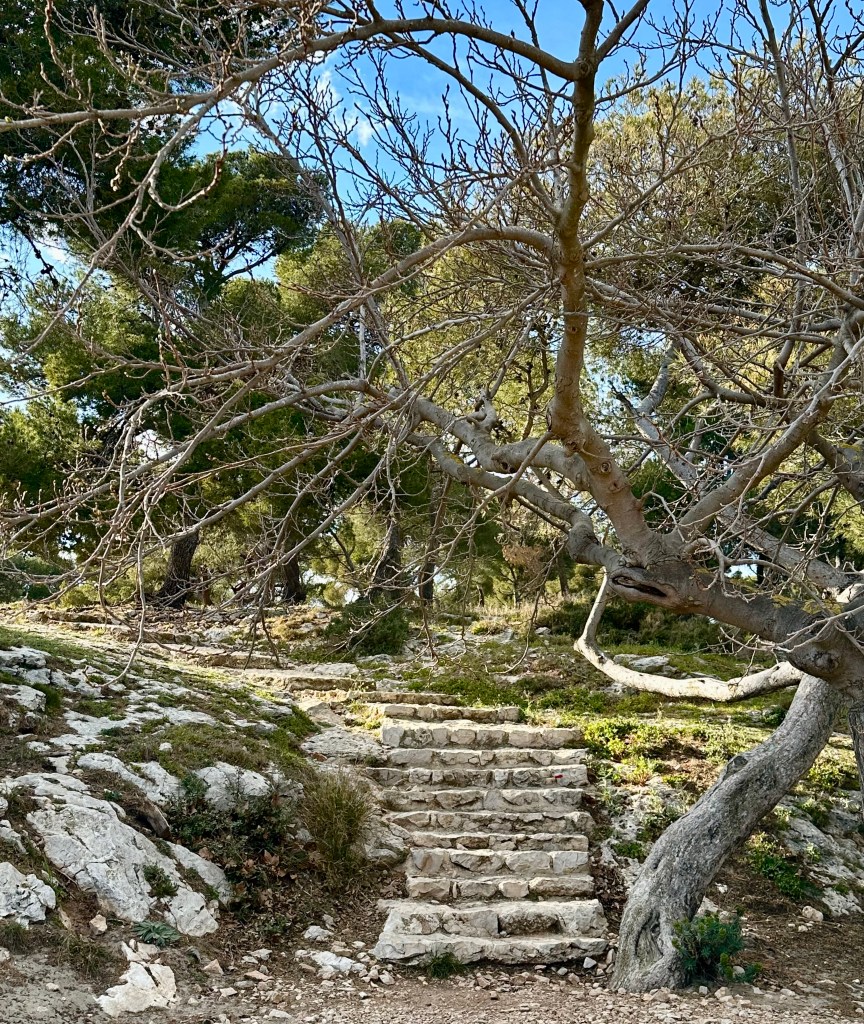
This place is known as the “Terre Sainte” or Holy Land. According to the legend surrounding Sainte-Croix, Mary Magdalene and Lazarus encountered a young shepherd near the shore who was both deaf and mute. Thirsty, they asked him for water. The boy could not hear them, yet somehow he understood and led them toward a wild fig tree whose broad leaves offered shade from the blazing Mediterranean sun. Beneath its ancient, gnarled roots, a tiny thread of water trickled from the earth, almost invisible among the dry stones and vegetation.
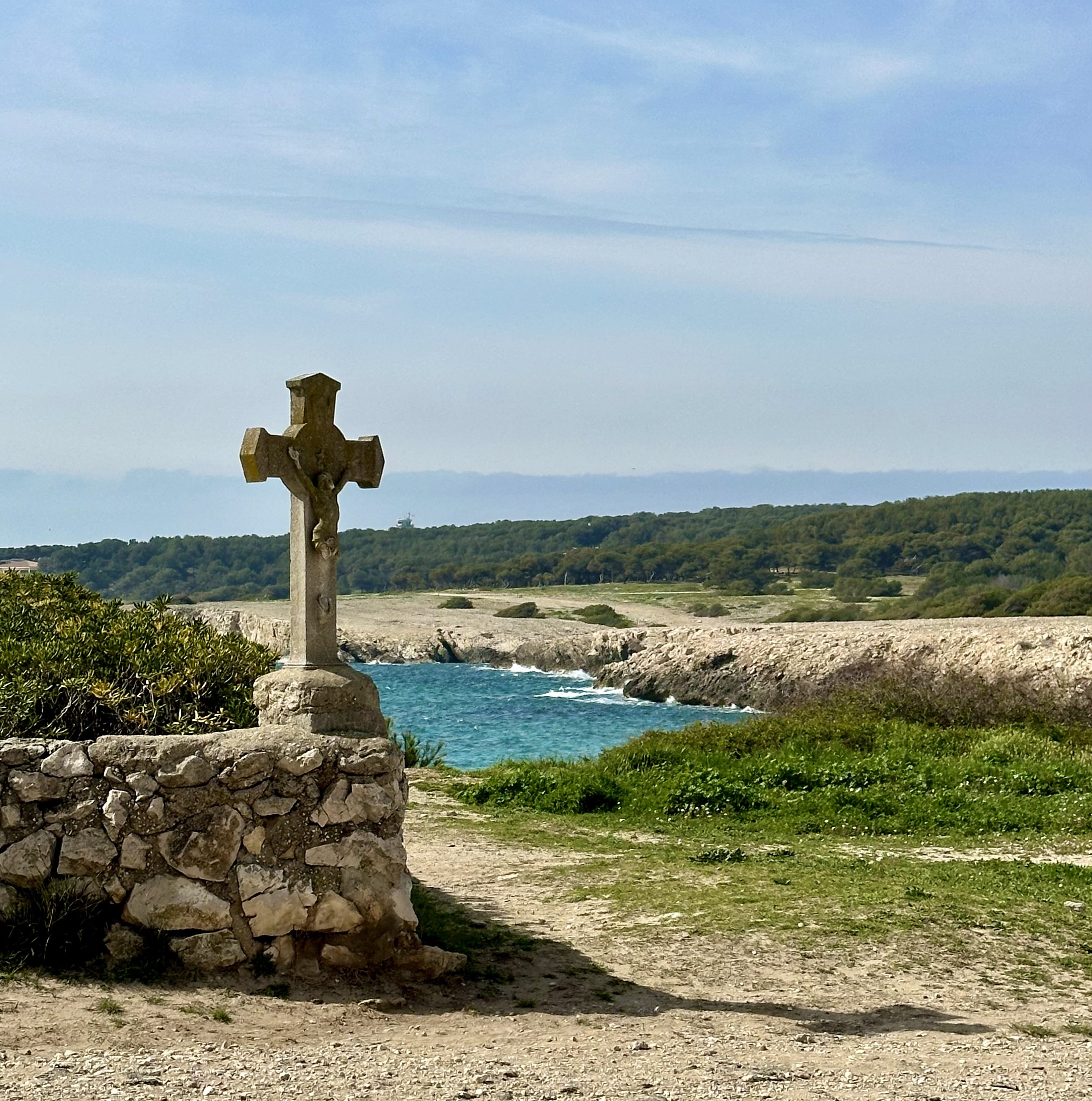
Mary and Lazarus knelt to drink, and suddenly, the trickle turned into a flowing spring. Clear water burst from the ground and flowed across the dry earth. They gestured for the shepherd to join them, and after just one mouthful of the pure water, he suddenly heard the birds singing overhead and the waves crashing against the shore. His tongue loosened, and he spoke for the first time, joyfully calling out to his family. Lazarus baptized the shepherd and his family in the spring, and they became among the first Christians of Roman Gaul. To mark this event, Lazarus built a cross on the bluff overlooking the sea, naming the place Sainte-Croix or Holy Cross.
For years, I searched for that spring, wandering around Sainte-Croix, hoping to find any sign of it. I envisioned discovering water beneath tree roots or catching the faint sound of a spring near the cove. It was only a few months ago that I learned the spring is on private land. It seems some miracles are not open to the public.
Another piece of Christian history is found here, one that reaches far back to Jerusalem. Sainte-Croix is home to a verified fragment of the True Cross of Jesus Christ.
The fragment was not here when Mary Magdalene arrived. Its story begins centuries later, with Saint Helena, the mother of Emperor Constantine, who is credited with discovering the True Cross in Jerusalem in the fourth century. The relic was later taken to Constantinople, and fragments of the Cross eventually found their way into Christian communities elsewhere. This particular fragment eventually became part of the heritage of the parish of La Couronne.
Because of its inestimable value, it is not kept on public display. It is brought out only on particular feast days and religious occasions, traditionally May 3 and September 14, the feasts of the Finding and the Exaltation of the Holy Cross. On those dates, pilgrims walk barefoot across the rugged Provençal landscape to the chapel.
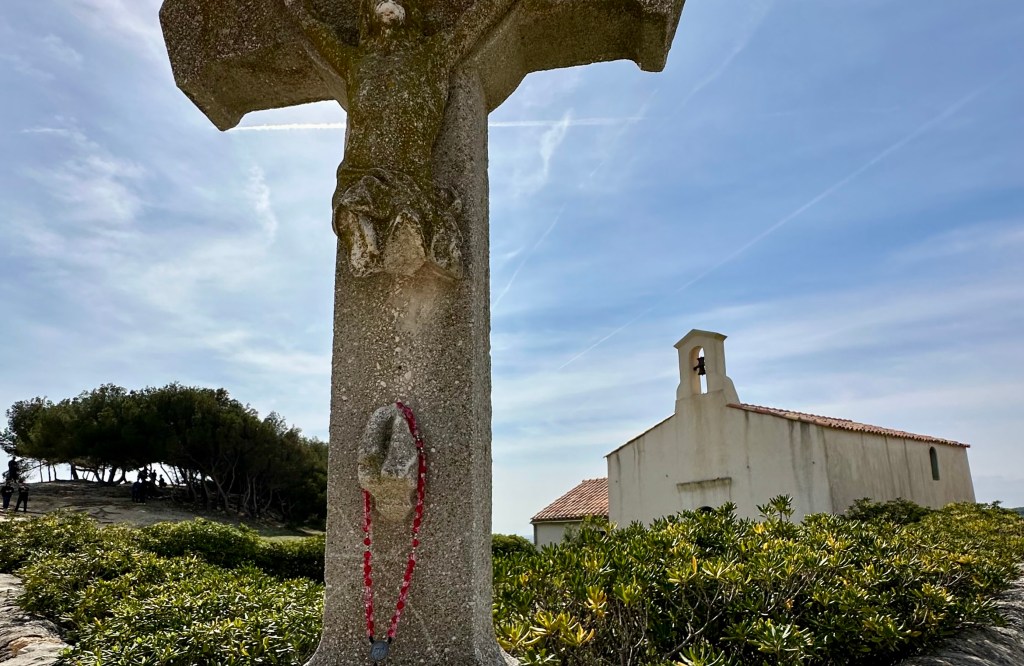
At the corner of a small garden connected to the white chapel stands a stone cross. Was it inspired by the one Lazarus set up? Each time I visited, I would jump the chain across the garden to check whether the chapel was open. It never was. However, one hot July evening last summer, I pulled at the heavy wooden doors, and to my surprise, they swung open. Inside was empty. Then I caught sight of Jesus on the beach below, laughing and playing with a group of boisterous children.
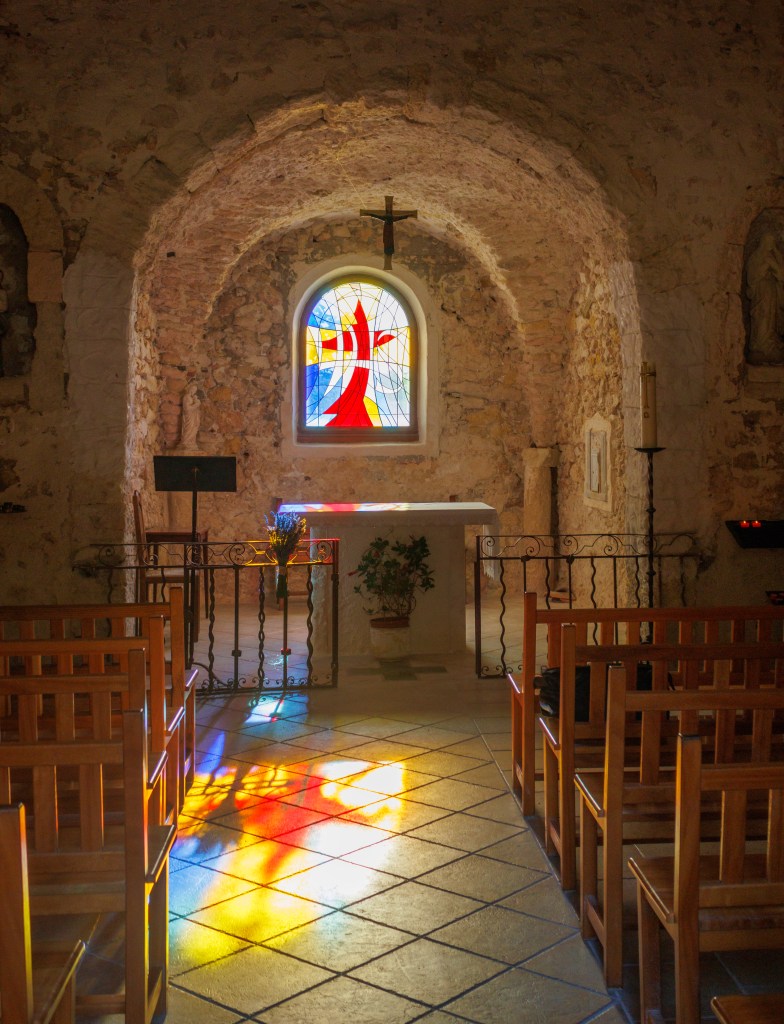
What did Mary and Lazarus do during their time at Sainte-Croix? On those cliffs, they might have learned from the shepherd and his family about this new land and its customs. They could have shared stories of their lives or discussed their friends in Les Saintes-Maries-de-la-Mer. Maybe they wondered what the other apostles were doing and where their journeys had taken them. Perhaps, for once, they didn’t think about how much farther they still had to go. Instead, they simply sat under the sun, watching the light shift across the water. At that moment, there was nowhere else they needed to be.
We often say that the journey is part of the destination, but there is still a temptation to keep looking ahead and wonder what happens next. We measure the distance still to travel, think about the adventures and challenges that await, and convince ourselves that we can rest when we finally arrive.
But what if we pause along the way? What if we stop thinking about how far we still have to go and simply be in the moment?
God doesn’t ask us to rush through this journey called life. Instead, He encourages us to pause periodically to appreciate the incredible beauty He’s woven into our path. Our destination probably won’t change if we take time to breathe, laugh, smile, and listen to the sea without needing to understand its message. It will still be there even if we take a moment to gaze at the puffy clouds drifting across the sky and notice the dragonfly’s wings moving like living prisms that catch the sun. It’s okay to remind ourselves that we don’t need to control every step ahead.
Eventually, we will begin walking again, just like Mary did. There will be more hills to climb, beautiful things to see, interesting people to encounter, uncertainties to face, and another stretch of road we cannot yet see. But we can walk trusting the One who guides our steps. And let’s stop for a drink with locals. Who knows, we may witness a miracle.
Join me next week for the last reflection as Mary Magdalene makes her final journey to the cave where she spent the rest of her days before God finally called her home.
Discover more from Amy L. Griffin
Subscribe to get the latest posts sent to your email.


beautifully written. Thank you for the wonderful reflection and photos
Thank you! I’m glad you enjoyed it.