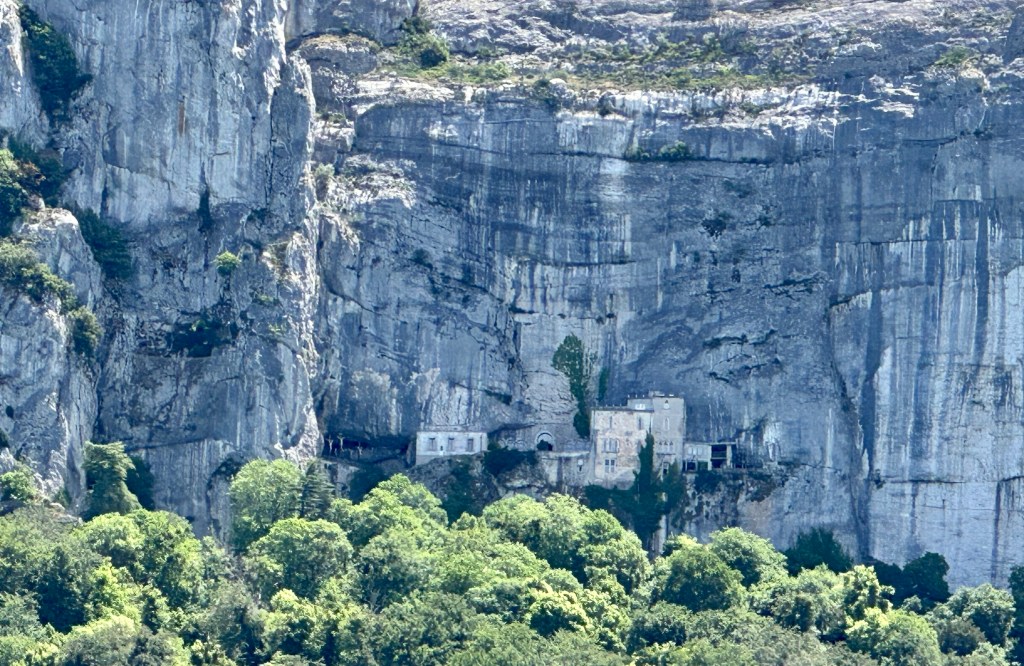
This is the final reflection on the footsteps of Mary Magdalene in Provence. At Sainte-Croix, the group split up, and Lazarus continued eastward and became the first bishop of Marseille while Mary Magdalene traveled northeast into the deep forest of Sainte-Baume. There, high in the mountain, she withdrew from the world.
The Grotto of Mary Magdalene is about an hour-and-a-half drive away from where I live. After navigating the always-frightening risk-your-life traffic of Marseille, the road climbs through a succession of narrow switchbacks, the mountain pressing close on one side and cliffs dropping away on the other.
The Sainte-Baume massif stretches for 12 kilometers and is somewhere between 80 and 140 million years old. These rocks were here before Mary Magdalene, before Christianity, before the first pope, king, or pilgrim climbed toward her cave.
To reach her grotto, we left the car at the Three Oaks parking area, about 2,300 feet above sea level, and entered the Sacred Forest on foot. The Sacred Forest is an unusual combination of oak, beech, maple, fir, and pine trees. The path called the Chemin des Rois, or the Path of the Kings, is named for the French and Spanish monarchs and several popes who once made this pilgrimage. It is only a little over a mile, but it climbs roughly 700 feet, often so steeply that calling it a walk seems charitable.
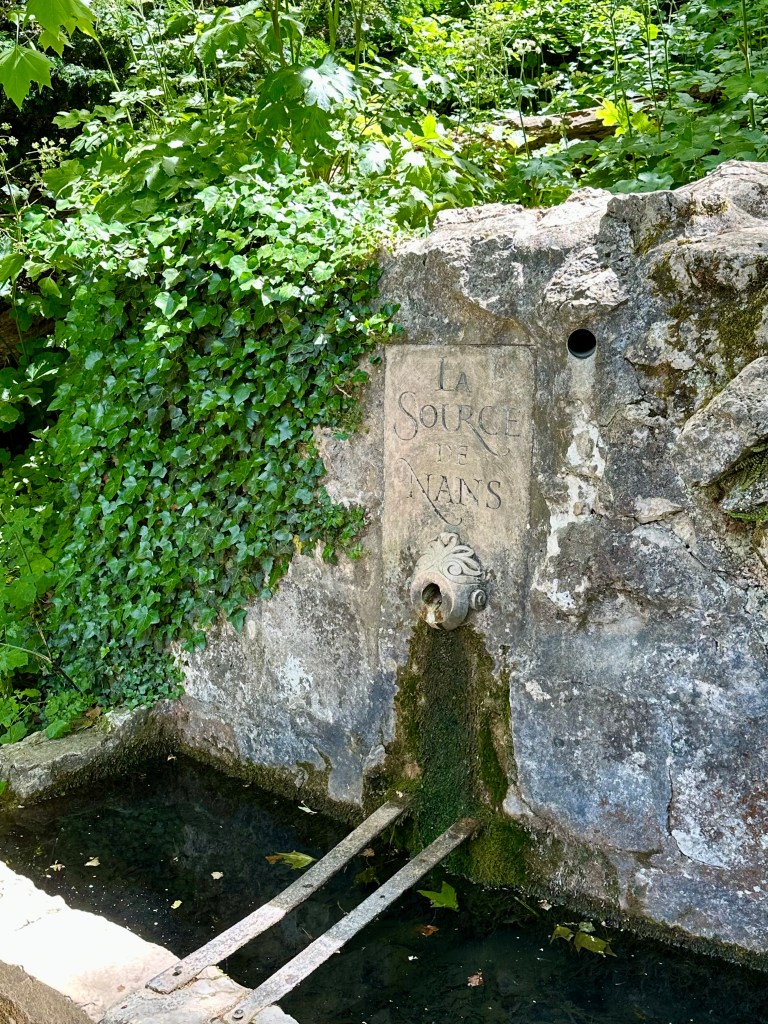
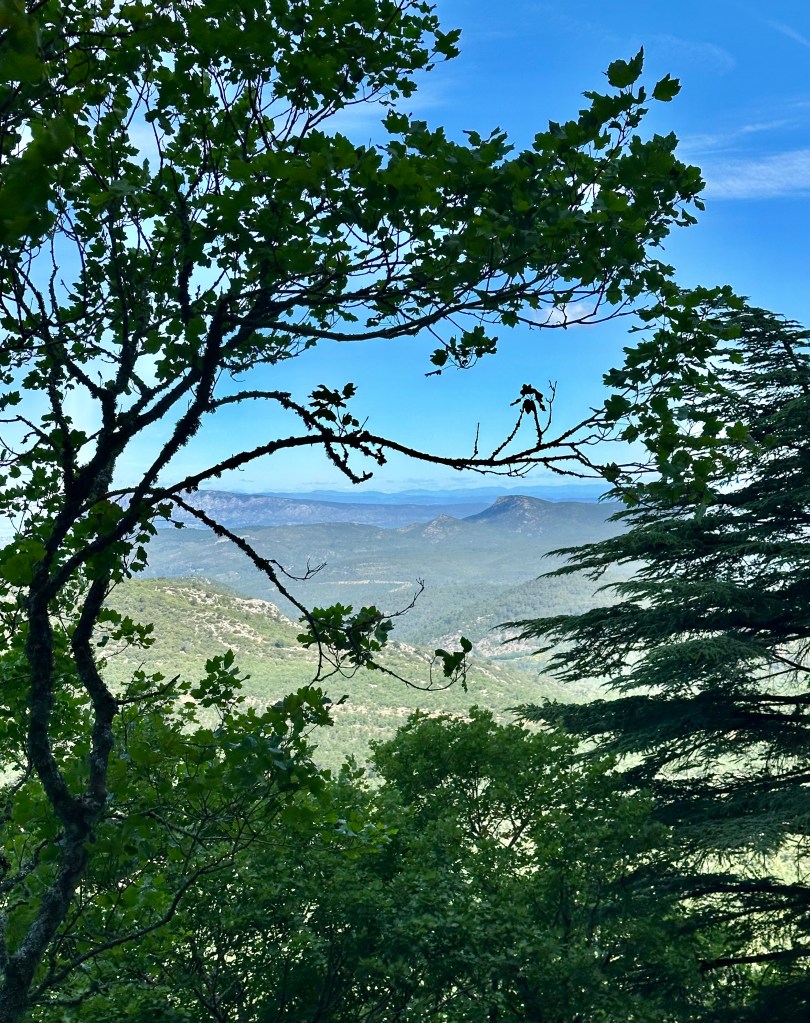
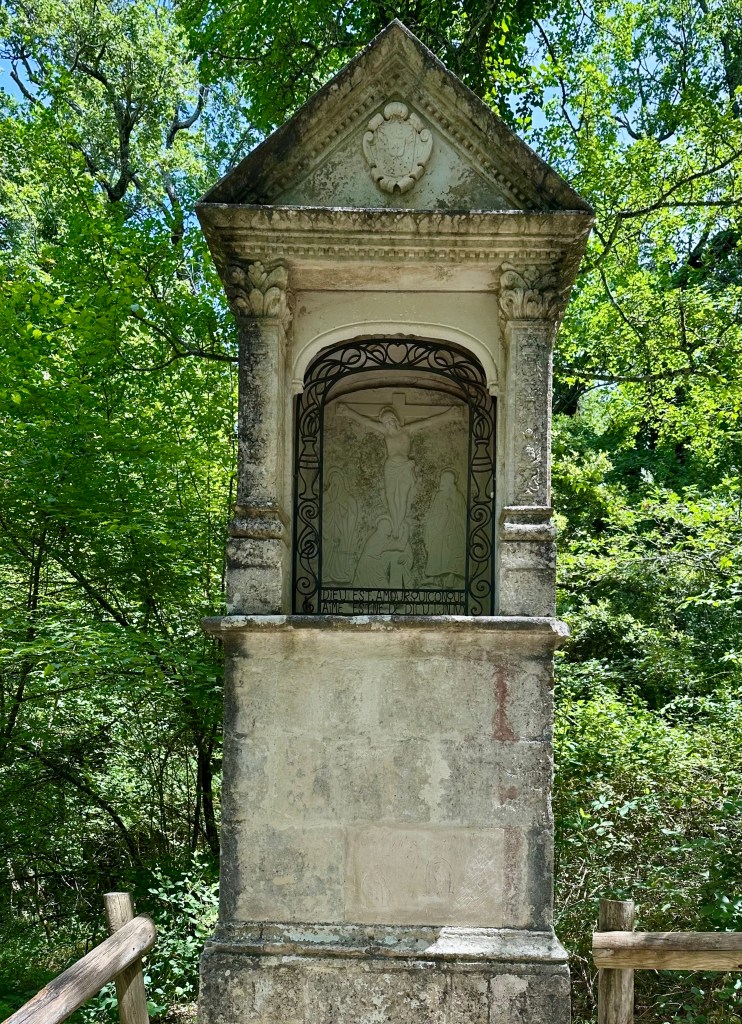
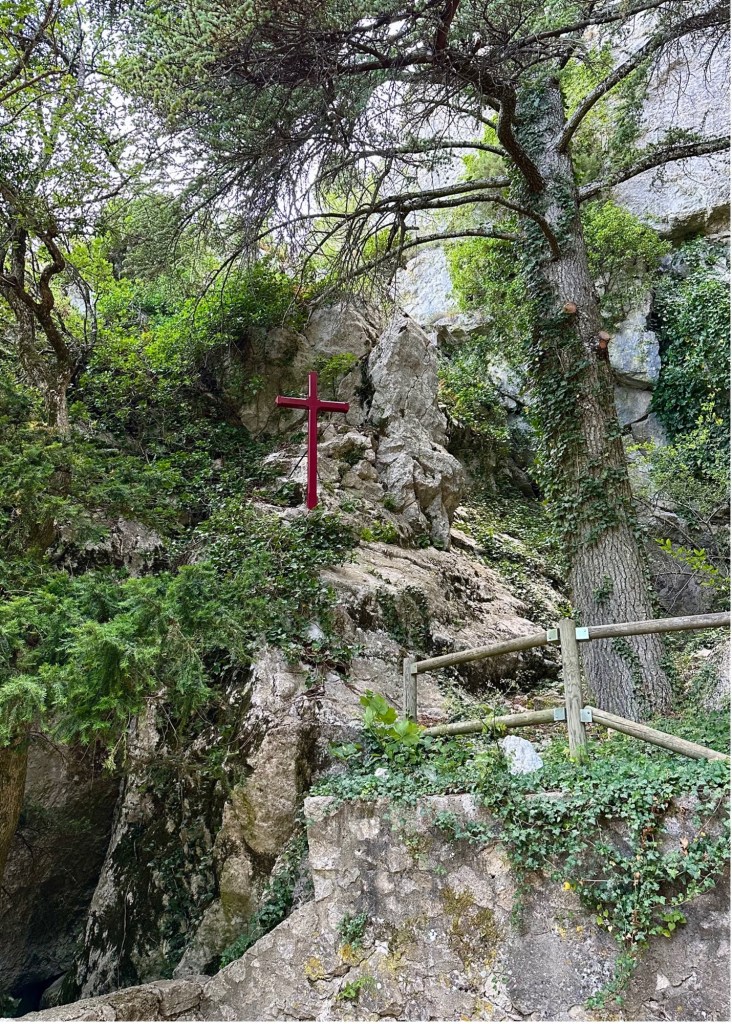
At several points, the forest smelled unmistakably of roses and violets. Their sweetness seemed improbable in that shadowed woodland, where the dominant perfumes were earth, bark, and pine. I have no idea whether the fragrance came from flowers hidden somewhere beneath the trees or from something I cannot explain. Some experiences lose their beauty if we try to interrogate them. As we climbed, vivid red crosses began appearing among the trees, marking the Stations of the Cross.
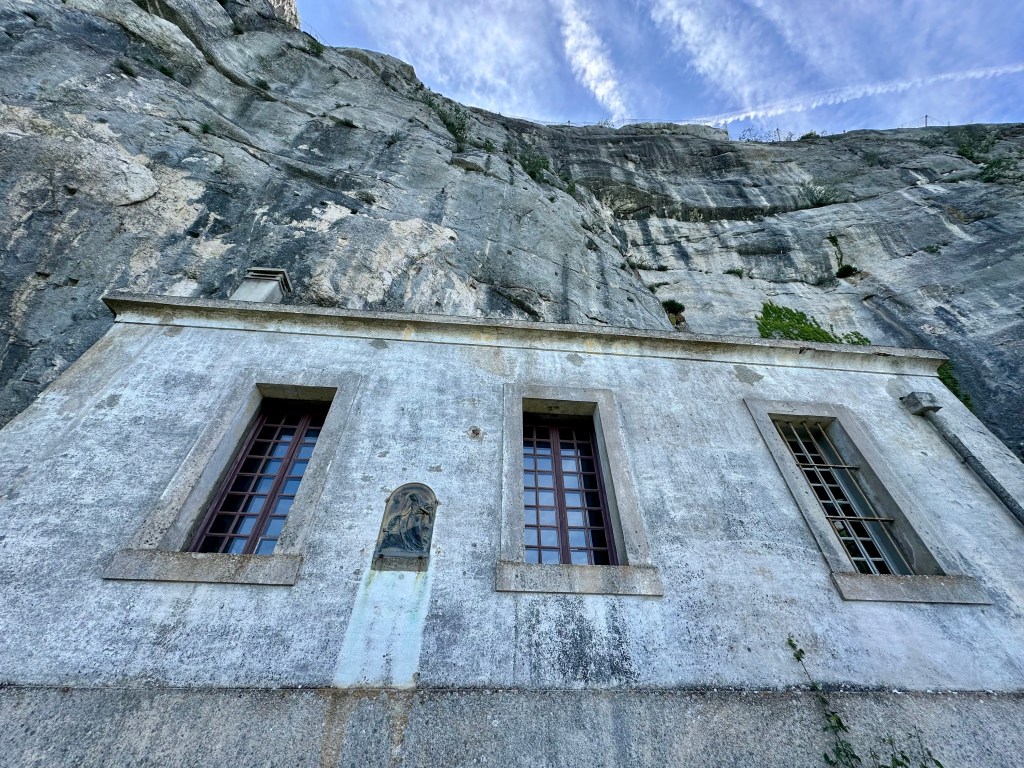
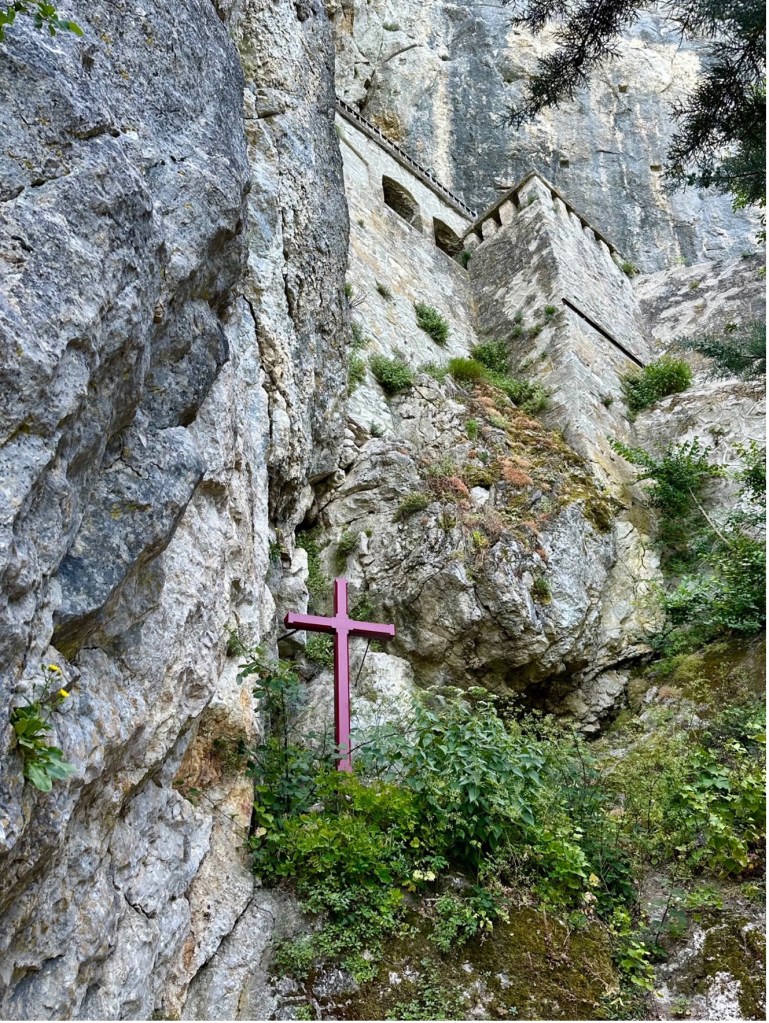
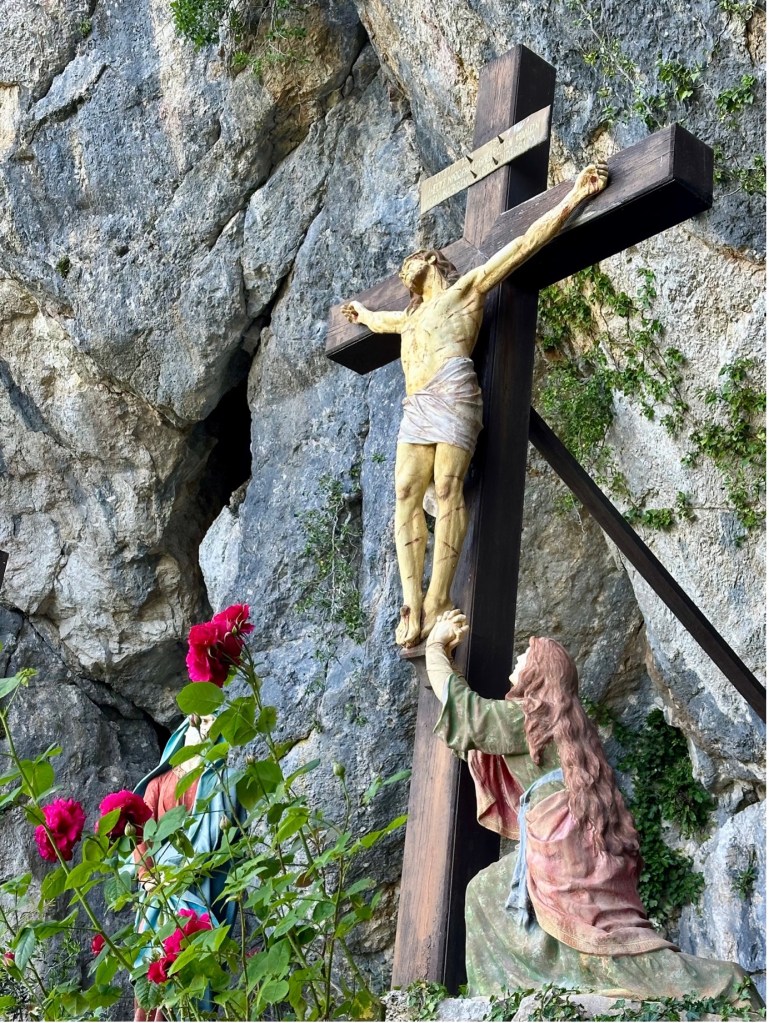
Finally the trees parted, and the sheer cliff face rose abruptly before us. Stone steps led toward the sanctuary built into the rock itself at an elevation of 3,000 feet. At the entrance was a crucifixion scene, followed by another flight of steps into a stone courtyard where a hauntingly beautiful blue stone Pietà showed the Virgin Mary holding the body of Jesus, with Mary Magdalene at His feet.
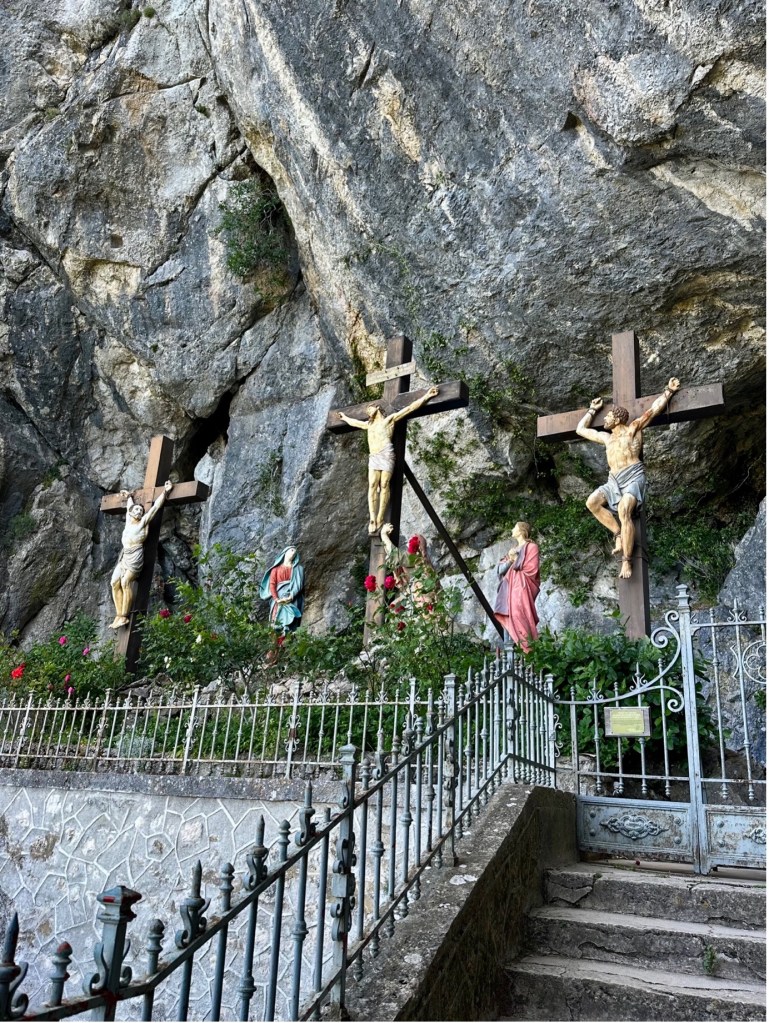
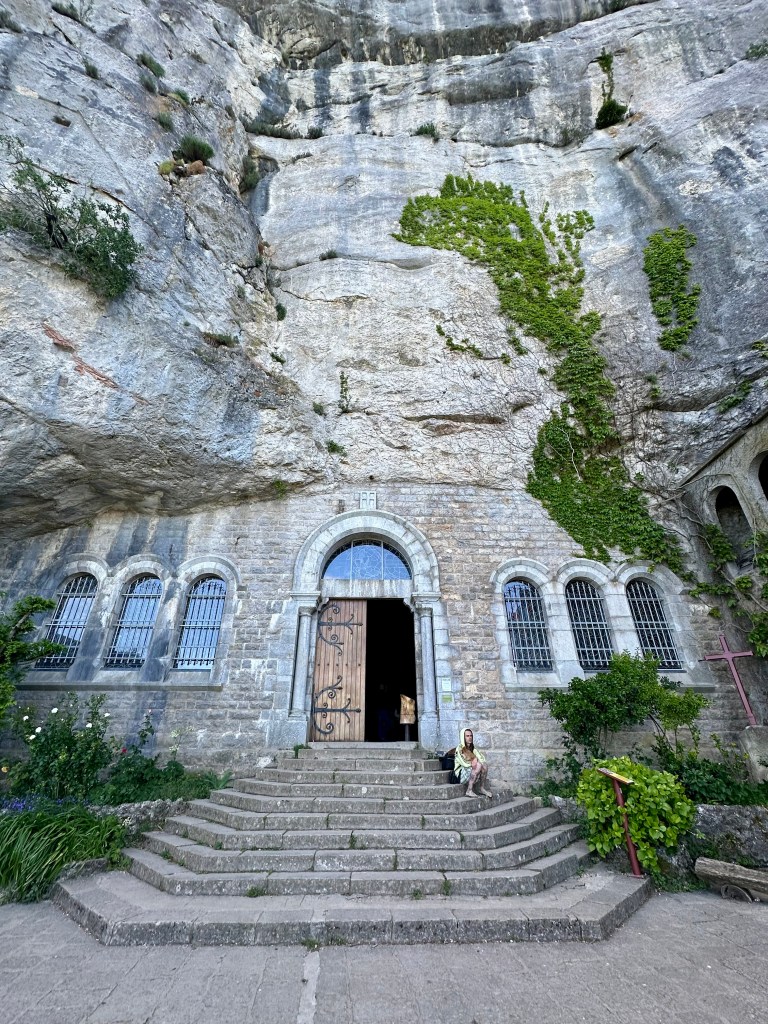
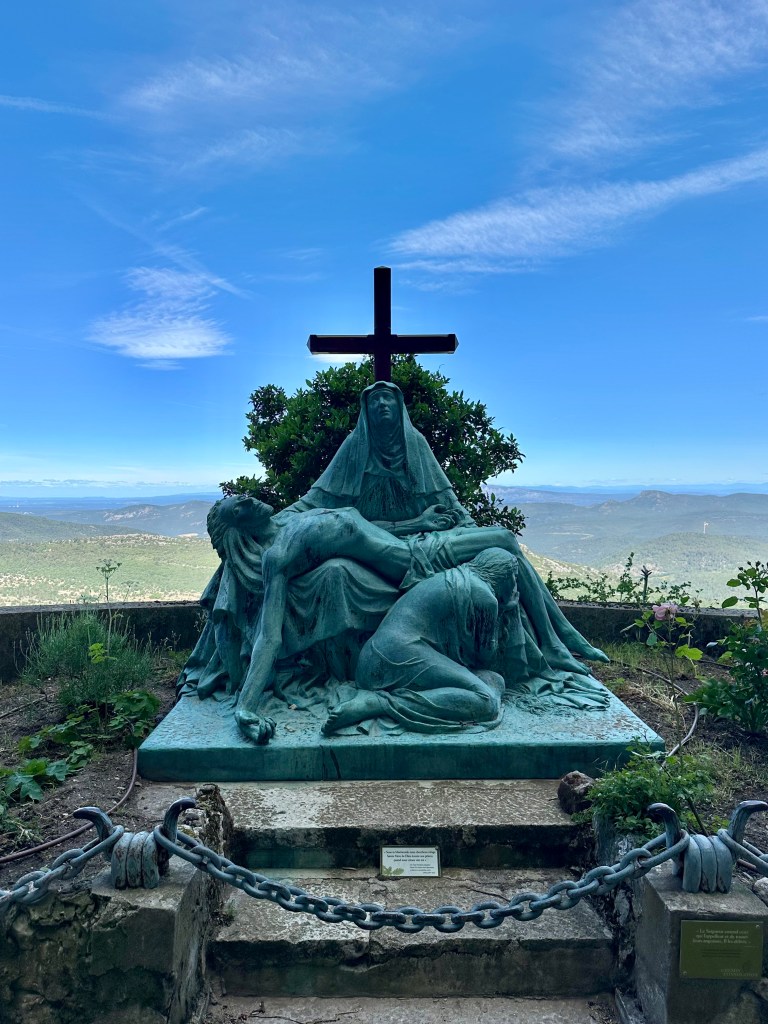
Inside the grotto, the air was cool and wet. In the silence, candlelight flickered against stones stretching away into an ancient darkness. There were only a handful of people and one Dominican friar. There were no glossy explanations, no exhortation to repent or burn in the fires of hell, no racks of souvenirs and no café selling sandwiches to hungry pilgrims. There was no need to manufacture holiness here. The mountain had been doing that for thousands of years.
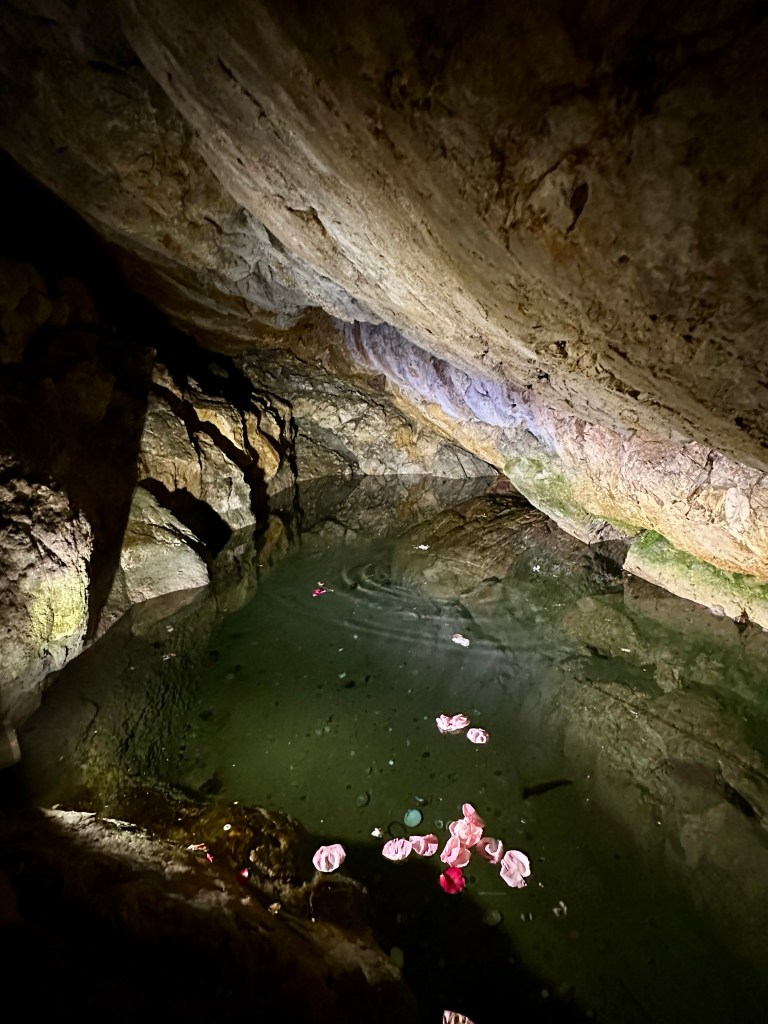
The grotto was unexpectedly spacious, spanning two levels, which deepened its mystery. Inside, there was a white altar, simple wooden pews, iron candle holders, and a handful of statues. A stone staircase descended to the cave’s wet floor. At the bottom was a spring with rose petals linked in some way to Saint Sidoine, the figure traditionally remembered as the man Jesus healed of blindness with His saliva.
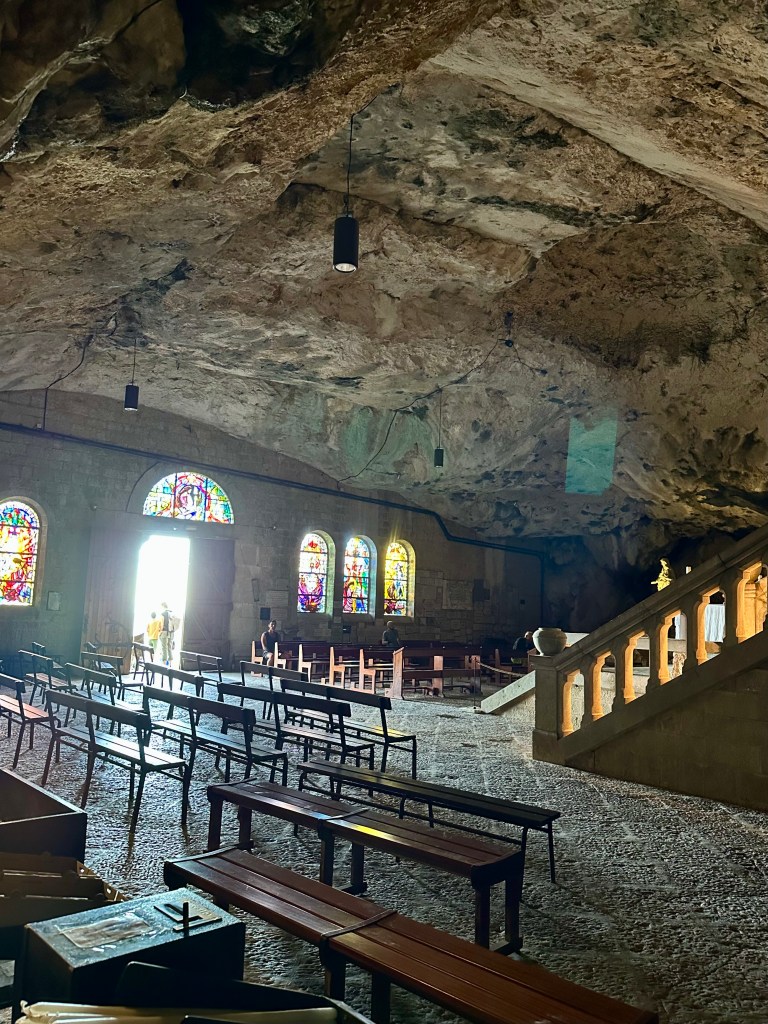
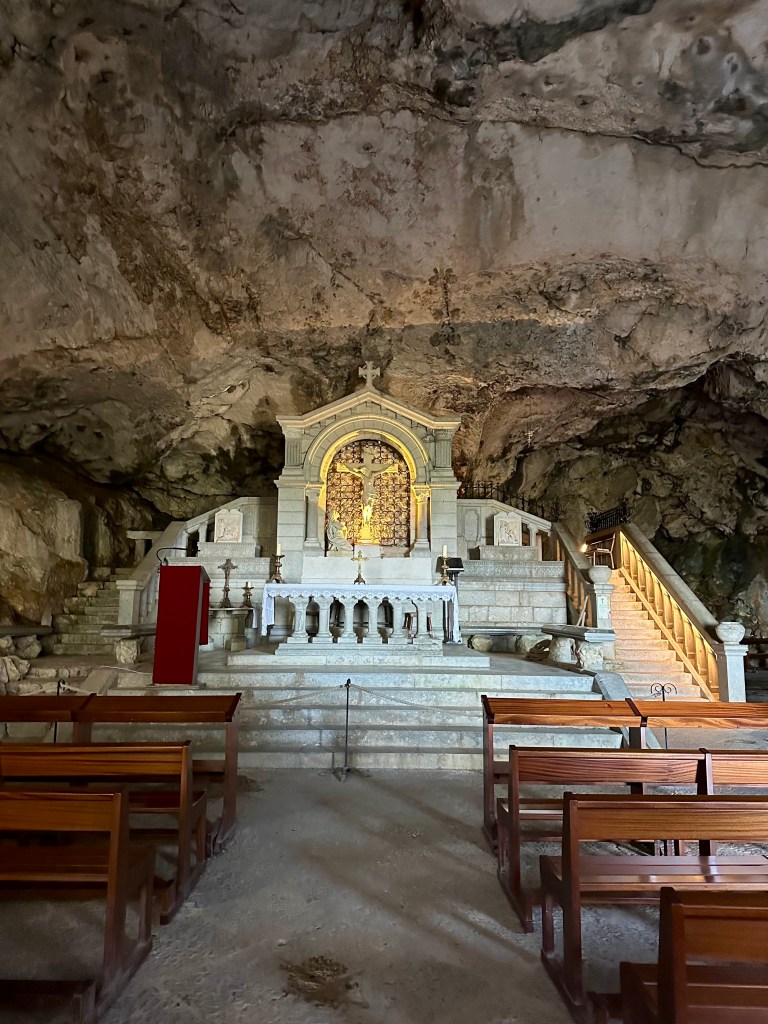
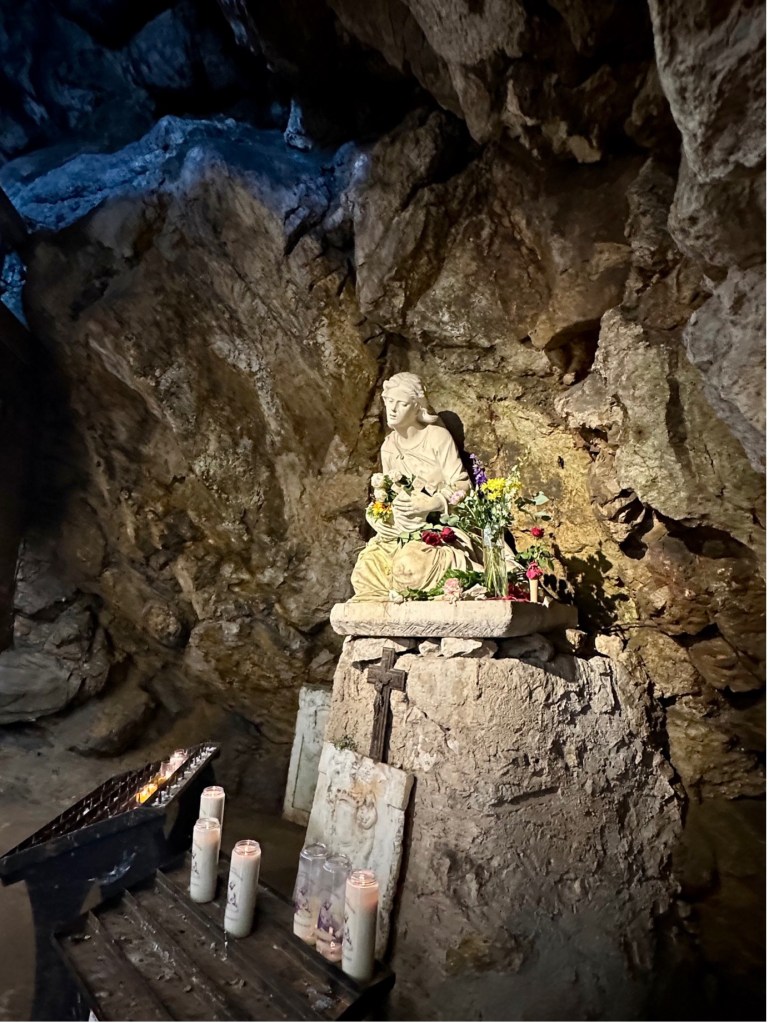
After lighting a candle and placing it on the iron rack, I sat on the wooden bench facing the statue of a young Mary Magdalene. I’ve sometimes wondered why people withdraw from society, why hermits live in solitude. Mary was probably exhausted and yearned for a place away from the noise and stress of the outside world. Maybe here, alone in this silence of the ancient mountains, she deepened her bond with Christ.
Legend recounts that angels brought her food and, seven times daily, lifted Mary from the darkness of the grotto to the mountain’s summit to participate in the liturgy of heaven, then returned her to solitude. At the very top of the mountain stands the small chapel, the Chapelle du Saint-Pilon, which pilgrims can visit today. Her existence was caught between two realms: a hidden life of contemplation and the unimaginable nearness of God.
The grotto at Saint Baume does not venerate or celebrate a flawless saint who lived a calm, pristine life. Mary Magdalene’s life was messy and troubled, and she was misunderstood in her time and remains so today for many. But she was deeply loved by Jesus, who systematically bypassed the religious elites, the spiritually smug, and the culturally respectable. In the garden after the Resurrection, at the dawn of the day, Jesus Christ entrusted Mary Magdalene, and nobody else, with telling the disciples and the world one of the greatest messages in human history.
Death is overcome by Love, and we are all invited to the table of Eternal Life.
To this day, Mary Magdalene continues to bring people to Christ, with over half a million pilgrims climbing the steep path each year to her sanctuary. We will never know how many lives have been changed or will be changed thanks to her.
Mary teaches us many things, including that faith is not a leisurely walk in a well-kept garden, dressed in our Sunday best. Her long journey began in Galilee, then to Jerusalem, across the Mediterranean on a raft with no sails, onto the windswept shores of Les-Saintes-Maries-de-la-Mer, across the rugged coastline to Sainte-Croix, and then thousands of feet towards the sky at Sainte-Baume.
Each of us follows a unique path, a constantly changing journey through the seasons of life. Sometimes we walk alone and other times with wonderful companions. We make new friends, and our laughter sparkles like sunlight on the sea. We lose others along the way, and our tears mingle with the falling rain. Inevitably, we take wrong turns, follow poor advice, and fall to the ground, scraped and bruised. But no detour lasts forever, and no injury or loss marks the end.
God does not wait for us at the finish line, urging us to hurry up and get our act together. No, He meets us exactly where we are, at every starlit pause and every stumble, and walks with us through every step to bring us home.
Discover more from Amy L. Griffin
Subscribe to get the latest posts sent to your email.

