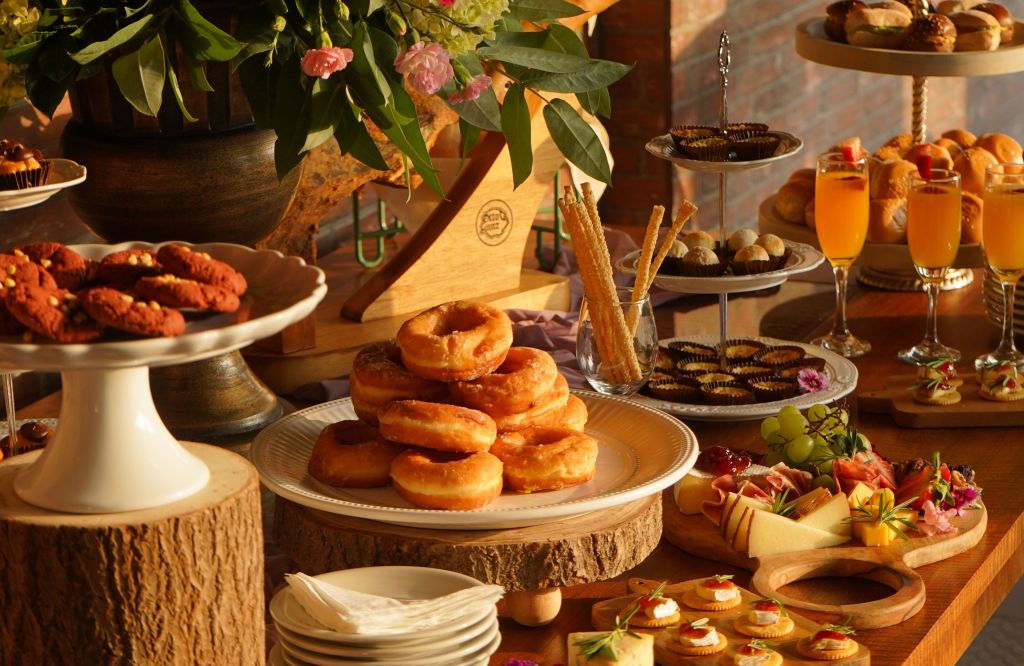
There are few places more exciting than a breakfast buffet. We stand before it, plate in hand, marvelling at the sheer abundance of it all. Pancakes steaming beneath a silver lid, waffles stacked in a neat tower, eggs of all kinds, crisp bacon, sausages, fluffy croissants, fresh fruit, toast waiting beside little dishes of butter and jam, and enough strong coffee to resurrect the dead. Near the end of the table, there is a suspiciously healthy bowl of high-protein grains mixed with raw vegetables, bran cereal, and green kale smoothies.
We begin with the pancakes, then add bacon and a sausage or two because there is room, a generous spoonful of scrambled eggs, a croissant, and then a frosted donut because we have abandoned all pretense of moderation. We add some fruit for color and perhaps a little blueberry pie yogurt so we can tell ourselves we are still making responsible health decisions. As we carry our overloaded plate to the table, we notice a small white notecard taped to the napkin holder. It reads, “Welcome to God’s Breakfast Buffet.”
Imagine that! God has a buffet! It must be overflowing with all-you-can-eat mercy, forgiveness, grace, and love.
We eat heartily and are about to go back for a second helping, and then pause. Suddenly, we worry that we have asked too much already, that we’ve most likely used up our portion of patience or forgiveness, or that we have returned with the same mistakes one too many times.
But it doesn’t seem to work that way. God is not standing behind the buffet with a calculator, keeping track of how many servings of mercy we have already consumed. We can come back tomorrow, and the next day, and the day after that. We can arrive poorly dressed, with complicated dietary restrictions, and there is still more. Forgiveness has not run out, patience has not been put on ration, and there is plenty of love to go around.
But standing before all that abundance, we might discover something about ourselves. We are very selective of what we take and remarkably skilled at justifying our choices. We know what we like and reach for it first, passing by anything that looks remotely as though it was designed to improve our character.
The bacon has protein, the fruit is full of vitamins, and one more waffle is hardly a world crisis. We can always try the whole wheat germ tomorrow. Following God often has the same kind of creative reasoning. We rarely reject the difficult parts outright and easily find reasons to leave them for another day or to someone else entirely.
We eagerly fill our plates with the assurance that God loves and forgives us. They are piled high with the hope that carries us through frightening times, and the promise that death is not the end. These are the pancakes, bacon, and cinnamon rolls of faith, familiar and satisfying enough to make us go back for seconds, probably thirds. Doggy bag anyone?
Then we reach the blah brown bran cereal, the menacing grain-and-vegetable bowl, and unappetizing kale smoothies. These are the harder parts of faith: forgiving the person who hurt us, choosing humility when we would much rather be right, giving away what we desperately want to keep, and serving others when we would much prefer to have our own table-side service.
Given enough time, we can construct a plate of faith that suits our tastes remarkably well. We keep the tasty things that reassure us, sweeten the ones that inconvenience us, and leave the unappealing dishes for someone else. The trouble is that faith was never meant to be something we customize until it becomes entirely to our own liking.
We most likely won’t jump with joy or love everything offered at His buffet. It’s doubtful that anyone has ever rushed across a restaurant dining room because they heard the twice-boiled quinoa porridge had just been replenished, but that does not mean we should live on croissants alone. We should be willing to taste what challenges us, even when forgiveness is harder to swallow than resentment and humility is far less satisfying than being right.
God isn’t going to love us more or less because we only eat extremely healthy foods and deprive ourselves of the tasty ones. He isn’t going to love us any more or less if we just stuff ourselves with sweet goodies and skip the stop-judging-others plate. He is Love itself, and we can’t do anything to change that. Thank goodness. But by following Jesus’ teachings and eating a balanced diet, we are the ones who change. Let’s admit it, we generally feel better when we eat healthier and exercise. Our journey is about transforming ourselves and truly changing to love God more each day and live out His word. Nobody said it would be easy.
Brunchphoto credit: Richard Bell
Discover more from Amy L. Griffin
Subscribe to get the latest posts sent to your email.

